 Kwisi: O dinosaure efe?
 Ntwa ya didinosaure
 Peiso ya didinosaure
 Dipapadi tse nyane tsa didinosaure
 Albamo ya ditikara
 Manane a TOP a didinosaure
 Nkgethele!
E phetse neng?

E ne e le lebelo hakae?


Dintlha tse monate
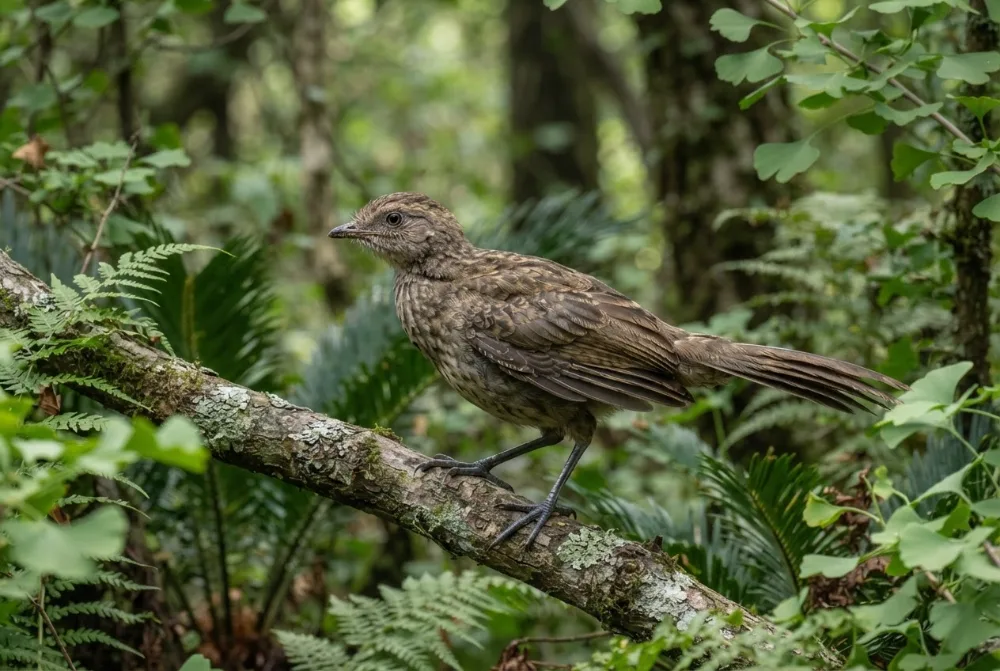
Yuornis is one of the most complete Late Cretaceous enantiornithine birds ever found, with a three-dimensionally preserved skull.1
Unlike most enantiornithines, Yuornis had no teeth. Its skull looked a lot like modern birds because it lost several bones, like the lacrimal and postorbital.1
The name Yuornis comes from 'Yu', the one-character abbreviation for Henan province in China, where it was discovered.1
Yuornis lived about 72 to 66 million years ago, during the very end of the Age of Dinosaurs.3
Its closest relative might be Gobipteryx, another toothless bird from the Late Cretaceous, but scientists are not sure because tooth loss evolved many times.1
Bakeng sa ditsebi tsa didinosaure
- Lebitso la saense
- Yuornis
- E rehilwe ke
- Xu et al. 20213
- Sehlopha
- Dinonyana tsa pele
- Lelapa / leloko
- Enantiornithes3
- Tlhophiso
- Theropoda > Avialae3
- Dilemo tsa mafika
- dilemo tse dimilione tse 72 ho isa ho 66 (Maastrichtian)3
- Dibopeho tsa mafika
- Qiupa3
- Dinaha
- Tjhaena3
- Direkoto tsa difosili
- 1 ho The Paleobiology Database3
- Ho sibollwa
- Yuornis was named in 2021 by Xu Li and colleagues. The species name junchangi honors paleontologist Lü Junchang. The fossil was found in the Qiupa Formation of Henan, China.12
- E sa ntse e phehwa kgang
- Scientists are not sure whether Yuornis belongs to the family Gobipterygidae, because the features linking it to that group are all related to tooth loss, which evolved many times separately.1
Moo dintlha di tswang teng
- Yuornis (en.wikipedia.org)
- PBDB Taxon (paleobiodb.org)
- Yuornis in The Paleobiology Database (CC BY 4.0): dilemo, dibaka, dibopeho tsa mafika, tlhophiso.
Ntlha e nngwe le e nngwe leqepheng lena e na le nomoro e supang mohlodi wa yona. Haeba re fositse ho hong, re kopa tshwarelo, re balatedi ba didinosaure, ha re koranta ya saense. Re bolelle ho [email protected] mme re tla e lokisa.
 Rex o lapile! Dino Wiki ke projeke ya ntate bakeng sa mora wa hae ya ratang didinosaure, ke mahala, ha ho dipapatso, ha ho disebedi. Batho ba baholo ba ka fepa Rex seneke ho thusa hore e dule e le inthaneteng.Fepa Rex
 Archaeopteryx
 Hesperornis
 Ichthyornis
 Baptornis
 Jurapteryx
 Gobipteryx
 Tyrannosaurus
 Triceratops
 Velociraptor
 Spinosaurus
 Ankylosaurus
 Parasaurolophus