 Ban dino nga? Kiis
 Xeexu dino
 Rawante dino
 Fo yu ndaw yu dino
 Albomu sitikeer
 Limu TOP yu dino
 Bett ma!
Campylognathoides
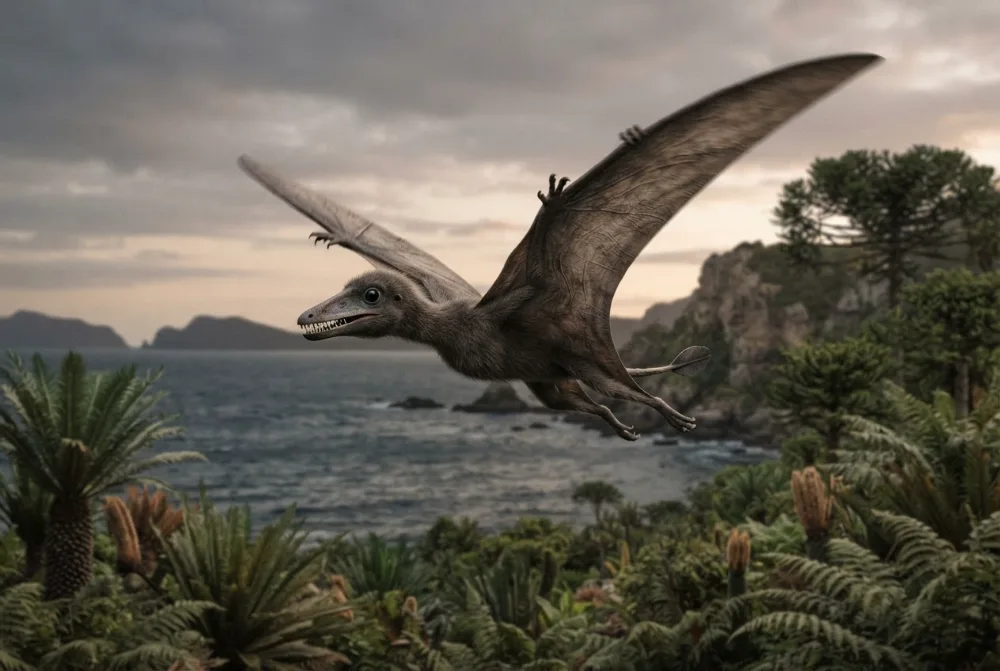
Campylognathoides was a small flying reptile that lived in the Early Jurassic, about 182 million years ago. It had long, narrow wings and a short tail, and it probably hunted at night for squid-like animals called belemnoids.12
Kañ la dundoon?
Naka la réyoon?
Naka la ay laafam yaatuwoon?
 gudd ni 4 muusu kër, bakkan ba geen⚽mënoon na naaw ci kaw teraŋ futbal bépp ci 8,4 segond
Naka la Campylognathoides réyoon, bu ñu ko méngalee ak YAW?
Ay kalkil rekk ci sa navigatëer. Dara du ñu denc, dara du ñu yónne fenn.
Naka la gaawoon?


Xibaar yu neex
Campylognathoides is the only pterosaur known to have eaten belemnoids. Scientists found hooklets from these squid-like animals in its stomach.2
Because belemnoids migrated to the surface at night, Campylognathoides may have hunted in the dark, like some modern bats and falcons.2
The first fossils of Campylognathoides were just wing fragments. Later, much better skeletons were found in the Holzmaden shale.1
Its original name, Campylognathus, was already used for a bug. So in 1928, the name was changed to Campylognathoides.1
Campylognathoides lived in a shallow sea. Its fossils are found in marine rocks, but it flew over the water to catch its prey.12
Scientists think Campylognathoides had a fast, agile flight, similar to falcons and mastiff bats that catch food while flying.1
Laaj yi ñu gën a laaj ci Campylognathoides
?How big was Campylognathoides?
It was quite small. The larger species, C. zitteli, had a wingspan of about 1.75 metres (5.7 feet), and the smaller species, C. liasicus, had a wingspan of around 0.9 metres (3 feet).1
?Was Campylognathoides a dinosaur?
No, it was a pterosaur, a type of flying reptile that lived alongside dinosaurs but is not a dinosaur itself.1
?What did Campylognathoides eat?
It ate squid-like animals called belemnoids. Scientists found hooklets from a belemnoid called Clarkeiteuthis conocauda in its stomach.2
Ngir ñi xam dino lool
- Turu xam-xam
- Campylognathoides
- Ku ko tudde
- Strand 19283
- Kurél
- Reptil yuy naaw
- Njaboot / klad
- Campylognathoididae3
- Klasifikasiyoŋ
- Pterosauria3
- Màggaayu doj yi
- 184 ba 183 milyoŋ at (Toarcian)3
- Formasiyoŋi doj
- Posidonia Shale3
- Réew yi
- Almaañ3
- Fosil yu ñu gis
- 12 ci The Paleobiology Database3
- Gisees
- The first specimen was described by Felix Plieninger in 1894 as Campylognathus zitteli, based on wing fragments from Germany. In 1928, Embrik Strand renamed it Campylognathoides because the old name was already taken.1
- Ñu ngi koy werante ba tey
- Scientists are not sure if Campylognathoides hunted only at night or also during the day. The idea of nocturnal hunting is still being studied.2
Fa xibaar yi jóge
- Campylognathoides (en.wikipedia.org)
- Dietary tendencies of the Early Jurassic pterosaurs Campylognathoides Strand, 1928, and Dorygnathus (dinodata.de)
- Campylognathoides in The Paleobiology Database (CC BY 4.0): at, béréb yi, formasiyoŋi doj, klasifikasiyoŋ.
Bépp xibaar ci xët wii am na lim bu wone fa mu jóge. Su nu juumee, baal nu, nun ñu bëgg dino lanu, du ab sërnaalu xam-xam. Wax nu ko ci [email protected] nu defar ko.
 Rex xiif na! Dino Wiki, mbiru ab baay la ngir doomam ju góor ju bëgg dinosoor, ci neen te amul kaamuñaate, amul tracker. Mag ñi mën nañu jox Rex tuuti ñam ngir dimbali ko mu des ci internet.Dundal Rex
 Pteranodon
 Quetzalcoatlus
 Dorygnathus
 Rhamphorhynchus
 Anhanguera
 Pterodactylus
 Dilophosaurus
 Stenopterygius
 Lufengosaurus
 Scutellosaurus
 Yunnanosaurus
 Sinosaurus