 Uyiyiphi idayinaso? Ikwizi
 Idabi leedayinaso
 Ugqatso lweedayinaso
 Imidlalo emincinci yeedayinaso
 I-albhamu yezitikha
 Iilisti ze-TOP zeedayinaso
 Ndothuse!
Anserimimus
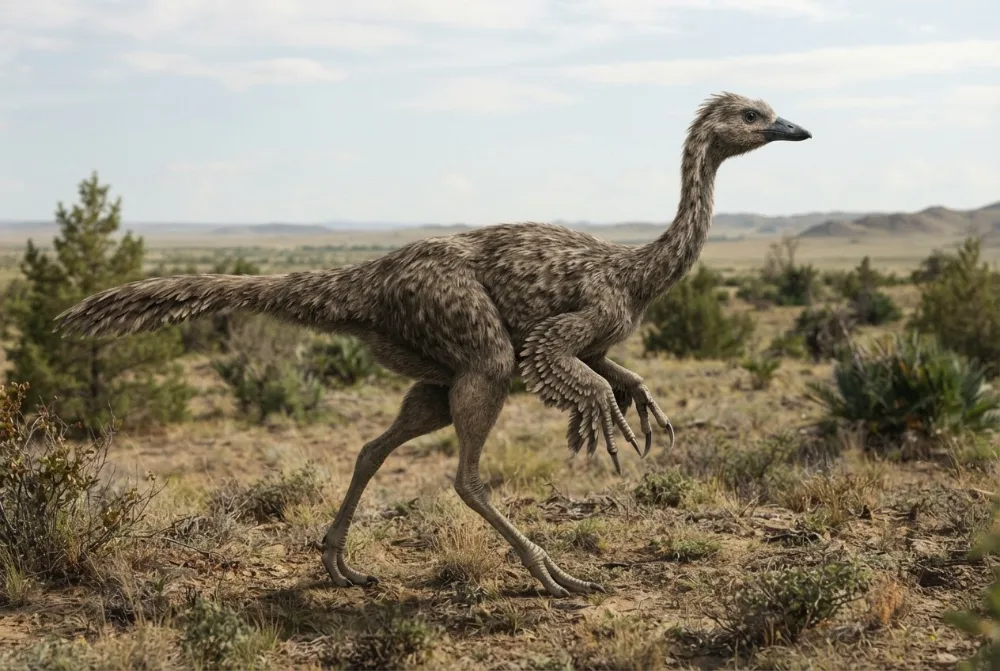
Anserimimus was a fast, long-legged dinosaur that looked a bit like an ostrich. It had strong arms with flat claws, which made it different from its relatives. This dinosaur lived in what is now Mongolia during the Late Cretaceous period.2
Yaphila nini?
Yayinkulu kangakanani?
Yayinde kangakanani?
Yayiphakame kangakanani?
uqikelelo
Yayinzima kangakanani?
 inde njengezinja ezingama-4, impumlo ukuya emsileni🍌inde njengeebhanana ezingama-19 zilandelelana🍉inzima njengamavatala angama-34🧸inzima njengabantwana basenkulisa abangama-9🎒inzima njengabantwana besikolo abangama-5🏃ibinokubaleka iimitha ezili-100 ngemizuzwana engama-5.5 (oyena mntu ukhawulezayo udinga i-9,6)
Anserimimus wayemkhulu kangakanani xa ethelekiswa NAWE?
Yimathematika nje kwibhrawuza yakho. Akukho nto igcinwayo okanye ithunyelwe naphi na.
Yayikhawuleza kangakanani?


Iinyani ezimnandi
Anserimimus had flat, straight claws on its hands, unlike the curved claws of other ornithomimids.2
Its arms were more powerful than those of other ornithomimids, with large crests for strong muscles like the biceps.2
The hand bones (metacarpals) were fused together, making the hand stronger.2
Anserimimus lived about 70 million years ago, during the Maastrichtian stage of the Late Cretaceous.2
Only one complete skeleton of Anserimimus has been found, and it is missing the skull and lower jaws.2
Its closest relative might be Gallimimus, another ornithomimid from the same formation in Mongolia.2
Anserimimus lived alongside giant dinosaurs like Tarbosaurus and Deinocheirus in the Nemegt Formation.2
Eyona mibuzo ibuzwa kakhulu: Anserimimus
?How big was Anserimimus?
About 3 metres long and weighed around 50 kilograms, though some estimates suggest up to 170 kilograms.2
?What did Anserimimus eat?
Scientists think it was probably an omnivore, but since its skull is missing, its exact diet is unknown.2
?When did Anserimimus live?
It lived about 70 million years ago, during the Late Cretaceous Period.2
?Why did Anserimimus have flat claws?
Nobody knows for sure. The flat, straight claws may have been used for a different way of gathering food, but the animal's skull is missing so its diet is hard to study.2
Kwiingcali zeedayinaso
- Igama lenzululwazi
- Anserimimus
- Inikwe igama ngu:
- Barsbold 19884
- Iqela
- Iidayinaso-nciniba
- Usapho / iclade
- Ornithomimidae4
- Ukuhlelwa
- Theropoda > Ornithomimosauria4
- Ubudala bamatye
- 72 ukuya ku-66 izigidi zeminyaka (Maastrichtian)4
- Izakhiwo zamatye
- Nemegt4
- Amazwe
- iMongolia4
- Iirekhodi zeefosili
- 2 kwi-Paleobiology Database4
- Ukufunyanwa
- Anserimimus was named by Mongolian paleontologist Rinchen Barsbold in 1988, based on a skeleton found during a Soviet-Mongolian expedition to the Gobi Desert in the late 1970s.2
- Kusaxoxwa ngayo
- Scientists are not sure what Anserimimus ate, because its skull has never been found. Its strong arms and flat claws might mean it had a different diet or way of gathering food than other ornithomimids.2
Apho iinyani zivela khona
- Anserimimus | Natural History Museum (nhm.ac.uk)
- Anserimimus (en.wikipedia.org)
- PBDB Taxon (paleobiodb.org)
- Anserimimus in The Paleobiology Database (CC BY 4.0): ubudala, iindawo, izakhiwo zamatye, ukuhlelwa.
Yonke inyani ekweli phepha inenombolo ebonisa umthombo wayo. Ukuba siphosisile, uxolo, sithanda iidayinaso, asiyojenali yenzululwazi. Sixelele apha: [email protected], siya kuyilungisa.
 URex ulambile! I-Dino Wiki yiprojekthi katata ukwenzela unyana wakhe othanda iidayinaso, isimahla, ayinazintengiso, ayinazilandeli. Abantu abadala banokuphakela uRex isidlwana ukuze incede ihlale kwi-intanethi.Phakela uRex
 Gallimimus
 Ornithomimus
 Struthiomimus
 Deinocheirus
 Dromiceiomimus
 Archaeornithomimus
 Tyrannosaurus
 Triceratops
 Velociraptor
 Spinosaurus
 Ankylosaurus
 Parasaurolophus