 Uyiyiphi idayinaso? Ikwizi
 Idabi leedayinaso
 Ugqatso lweedayinaso
 Imidlalo emincinci yeedayinaso
 I-albhamu yezitikha
 Iilisti ze-TOP zeedayinaso
 Ndothuse!
Yaphila nini?

Yayikhawuleza kangakanani?


Iinyani ezimnandi
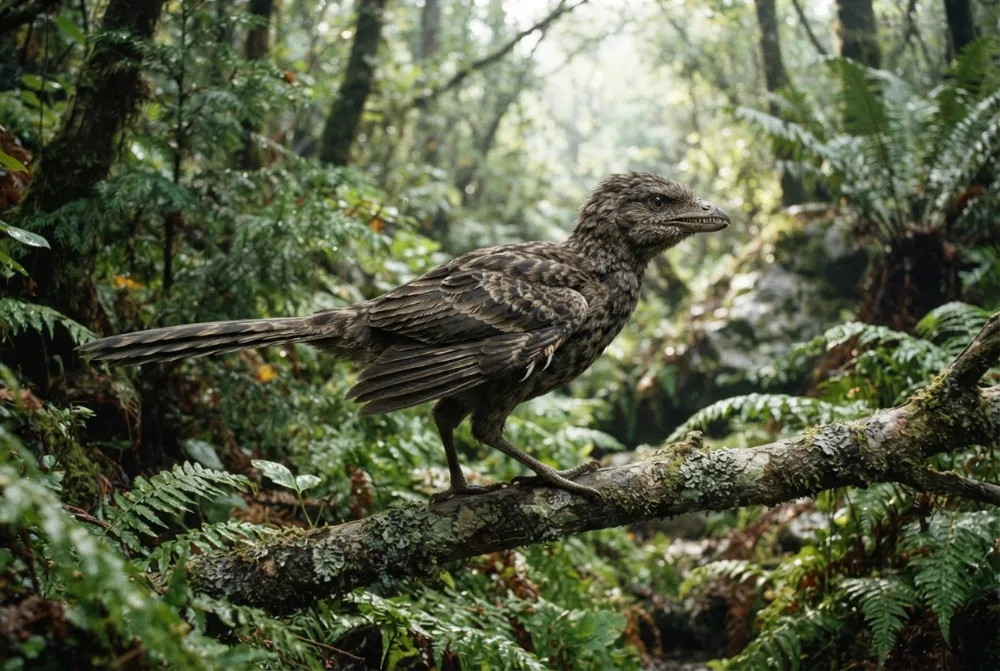
Archaeovolans lived during the Early Cretaceous period, about 121 to 113 million years ago.1
The only known fossil of Archaeovolans is a nearly complete skeleton, but it is missing the tail and parts of the pelvis and hindlimbs.2
Some scientists think Archaeovolans might actually be the same as another bird called Yanornis.2
The holotype specimen of Archaeovolans was once part of a fake fossil called Archaeoraptor, which was a mix of different animals.2
Archaeovolans had teeth, which is a feature of many early birds but not modern birds.5
Eyona mibuzo ibuzwa kakhulu: Archaeovolans
?Was Archaeovolans a dinosaur?
Yes, it was an avian theropod dinosaur, a bird-like dinosaur with feathers and teeth. Some scientists call it a bird, but birds are a type of dinosaur.53
?How big was Archaeovolans?
It was about the size of a chicken, roughly 30 to 40 centimetres (12 to 16 inches) long. This is based on its close relative Yanornis.4
?What did Archaeovolans eat?
It ate meat, especially fish. Fossils of its close relative Yanornis show fish bones in the stomach and crop area.4
Kwiingcali zeedayinaso
- Igama lenzululwazi
- Archaeovolans
- Inikwe igama ngu:
- Czerkas and Xu 20025
- Iqela
- Iintaka zokuqala
- Usapho / iclade
- Ornithurae5
- Ukuhlelwa
- Theropoda > Avialae5
- Ubudala bamatye
- 121 ukuya ku-113 izigidi zeminyaka (Aptian)5
- Izakhiwo zamatye
- Jiufotang5
- Amazwe
- iTshayina5
- Iirekhodi zeefosili
- 1 kwi-Paleobiology Database5
- Ukufunyanwa
- Archaeovolans was named by Stephen Czerkas and Xu Xing in 2002. The name means 'ancient flier'. The type specimen is IVPP V12444, a skeleton found at Xiasanjiazi in China.51
- Kusaxoxwa ngayo
- Scientists are not sure if Archaeovolans is a distinct species or if it is the same as Yanornis martini.2
Apho iinyani zivela khona
- PBDB Taxon (paleobiodb.org)
- Dinosaur Genera List update #192 (reptilis.net)
- Re: Dinosaur Genera List update #192 (dml.reptilis.net)
- Yanornis (Wikipedia) (Wikipedia)
- Archaeovolans in The Paleobiology Database (CC BY 4.0): ubudala, iindawo, izakhiwo zamatye, ukuhlelwa.
Yonke inyani ekweli phepha inenombolo ebonisa umthombo wayo. Ukuba siphosisile, uxolo, sithanda iidayinaso, asiyojenali yenzululwazi. Sixelele apha: [email protected], siya kuyilungisa.
 URex ulambile! I-Dino Wiki yiprojekthi katata ukwenzela unyana wakhe othanda iidayinaso, isimahla, ayinazintengiso, ayinazilandeli. Abantu abadala banokuphakela uRex isidlwana ukuze incede ihlale kwi-intanethi.Phakela uRex
 Archaeopteryx
 Hesperornis
 Ichthyornis
 Baptornis
 Jurapteryx
 Gobipteryx
 Stegosaurus
 Iguanodon
 Giganotosaurus
 Microraptor
 Deinonychus
 Baryonyx