 Uyiyiphi idayinaso? Ikwizi
 Idabi leedayinaso
 Ugqatso lweedayinaso
 Imidlalo emincinci yeedayinaso
 I-albhamu yezitikha
 Iilisti ze-TOP zeedayinaso
 Ndothuse!
Chiappeavis
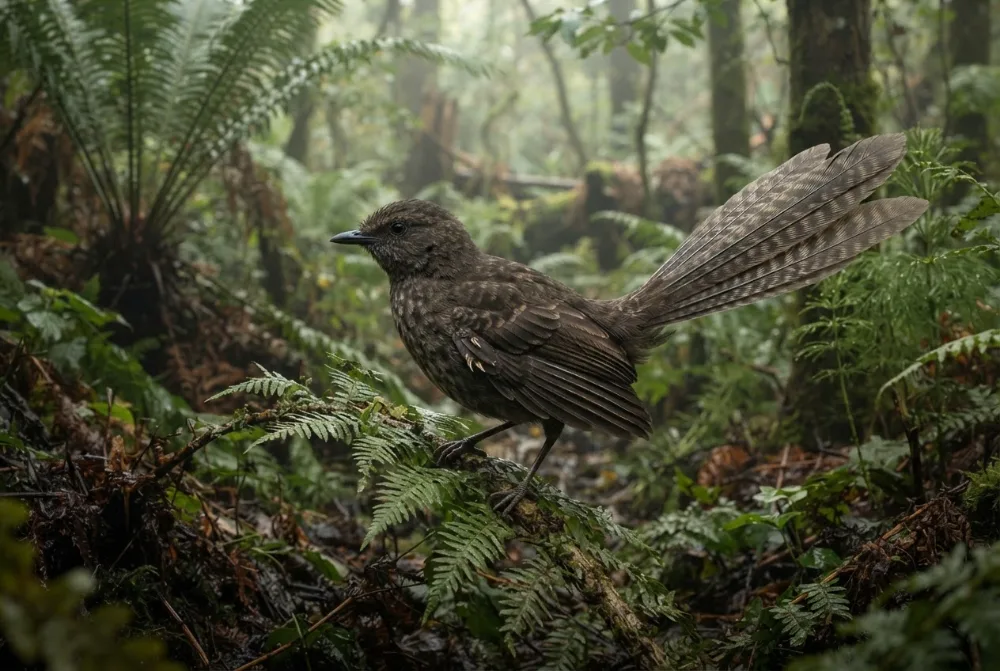
Chiappeavis was a bird that lived in the Early Cretaceous, about 120 million years ago. It had a fan-shaped tail made of long feathers that helped it fly. This bird was about the size of a modern pigeon and lived in what is now northeastern China.21
Yaphila nini?
Yayinkulu kangakanani?
Yayinde kangakanani?
Yayiphakame kangakanani?
uqikelelo
Yayinzima kangakanani?
Chiappeavis wayemkhulu kangakanani xa ethelekiswa NAWE?
Yimathematika nje kwibhrawuza yakho. Akukho nto igcinwayo okanye ithunyelwe naphi na.
Yayikhawuleza kangakanani?


Iinyani ezimnandi
Chiappeavis had a fan-shaped tail made of about ten feathers, with the middle feathers being the longest at about 74 mm.1
It is one of the earliest birds known to have an aerodynamic tail fan, which helped it steer during flight.1
The only fossil of Chiappeavis is a nearly complete skeleton with feather impressions, found in the Jiufotang Formation.2
Chiappeavis belongs to a group of early birds called enantiornithines, which were very common in the Cretaceous.2
Its name honors Dr. Luis Chiappe, a scientist who studied many ancient birds.1
The species name 'magnapremaxillo' means 'large premaxilla', referring to its big upper jaw bone.1
Inyaniso ngeentsomi
Intsomi: Some people think Chiappeavis had teeth like other early birds.
Inyaniso: The fossil does not show teeth, and scientists think its beak was toothless, similar to some later birds.1
Kwiingcali zeedayinaso
- Igama lenzululwazi
- Chiappeavis
- Inikwe igama ngu:
- O'Connor et al. 20163
- Iqela
- Iintaka zokuqala
- Usapho / iclade
- Pengornithidae3
- Ukuhlelwa
- Theropoda > Avialae3
- Ubudala bamatye
- 121 ukuya ku-113 izigidi zeminyaka (Aptian)3
- Izakhiwo zamatye
- Jiufotang3
- Amazwe
- iTshayina3
- Iirekhodi zeefosili
- 1 kwi-Paleobiology Database3
- Ukufunyanwa
- Chiappeavis was named in 2016 by Jingmai O'Connor and colleagues, based on a fossil found in Jianchang, Liaoning, China.23
- Kusaxoxwa ngayo
- Scientists are not sure exactly what Chiappeavis ate, because its diet is still being studied from its claws and jaw.1
Apho iinyani zivela khona
- Report An Enantiornithine with a Fan-Shaped Tail, and the Evolution of the Rectricial Complex in Early Birds (sciencedirect.com)
- Chiappeavis (en.wikipedia.org)
- Chiappeavis in The Paleobiology Database (CC BY 4.0): ubudala, iindawo, izakhiwo zamatye, ukuhlelwa.
Yonke inyani ekweli phepha inenombolo ebonisa umthombo wayo. Ukuba siphosisile, uxolo, sithanda iidayinaso, asiyojenali yenzululwazi. Sixelele apha: [email protected], siya kuyilungisa.
 URex ulambile! I-Dino Wiki yiprojekthi katata ukwenzela unyana wakhe othanda iidayinaso, isimahla, ayinazintengiso, ayinazilandeli. Abantu abadala banokuphakela uRex isidlwana ukuze incede ihlale kwi-intanethi.Phakela uRex
 Archaeopteryx
 Hesperornis
 Ichthyornis
 Baptornis
 Jurapteryx
 Gobipteryx
 Stegosaurus
 Iguanodon
 Giganotosaurus
 Microraptor
 Deinonychus
 Baryonyx