 Uyiyiphi idayinaso? Ikwizi
 Idabi leedayinaso
 Ugqatso lweedayinaso
 Imidlalo emincinci yeedayinaso
 I-albhamu yezitikha
 Iilisti ze-TOP zeedayinaso
 Ndothuse!
Scaphognathus
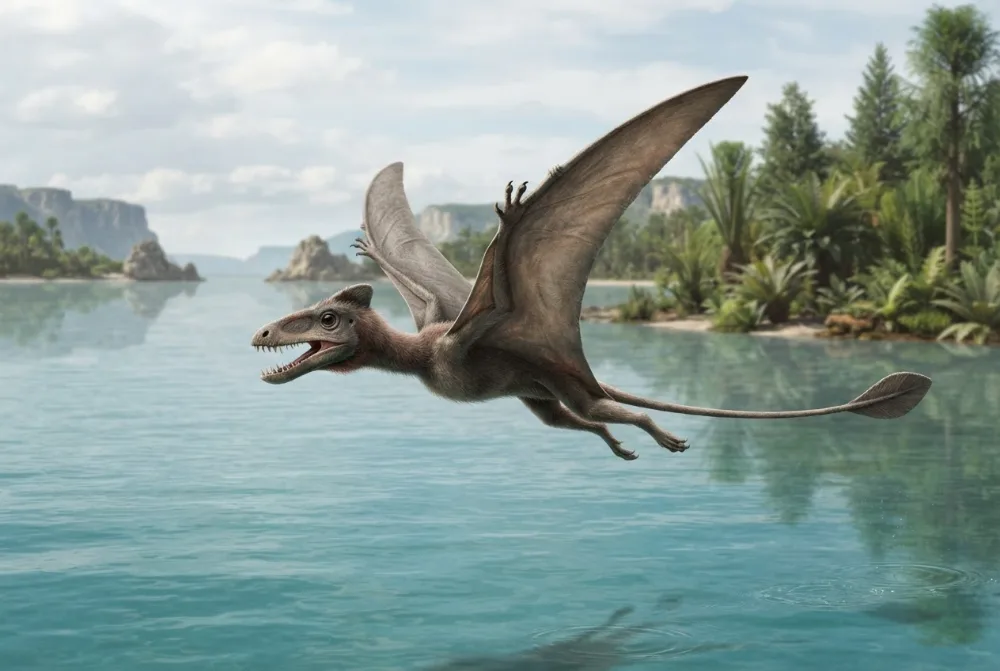
Scaphognathus was a small pterosaur with a blunt snout and a long tail. It flew over warm Jurassic lagoons and snatched fish from the water. Unlike many pterosaurs, it was probably awake during the day.1
Yaphila nini?
Yayinkulu kangakanani?
Amaphiko ayo ayebanzi kangakanani?
 inde njengeekati zasekhaya ezingama-2, impumlo ukuya emsileni⚽ibinokubhabha inqumle ibala lebhola ekhatywayo lonke ngemizuzwana engama-11
Scaphognathus wayemkhulu kangakanani xa ethelekiswa NAWE?
Yimathematika nje kwibhrawuza yakho. Akukho nto igcinwayo okanye ithunyelwe naphi na.
Yayikhawuleza kangakanani?


Iinyani ezimnandi
Scaphognathus had a short, blunt skull only about 11 centimetres (4.5 inches) long.1
It had 16 teeth in the upper jaw and 10 in the lower jaw, and they pointed straight up and down, not forward.1
A second specimen found was much smaller, with a wingspan of only 50 centimetres (20 inches), and scientists think it was a juvenile.1
Scaphognathus lived during the Late Jurassic, about 155 to 150 million years ago.1
Its eye bones (scleral rings) suggest it was diurnal, or active during the day, unlike some other pterosaurs that were nocturnal.1
The first fossil was described in 1831 by August Goldfuss, who thought it was a species of Pterodactylus.1
Eyona mibuzo ibuzwa kakhulu: Scaphognathus
?How big was Scaphognathus?
Scaphognathus had a wingspan of about 0.9 metres (3 feet). A second, smaller specimen had a wingspan of only about 50 centimetres (20 inches) and was probably a juvenile.12
?What did Scaphognathus eat?
Scaphognathus was a carnivore, meaning it ate meat. Its main food was a type of ancient fish called Pholidophorus.2
?Was Scaphognathus a dinosaur?
No, Scaphognathus was a pterosaur, a flying reptile, not a dinosaur. It lived during the Late Jurassic, about 155 to 150 million years ago.12
?Why did Scaphognathus have a long tail?
Scaphognathus had a long tail that ended in a leaf-shaped flap. This probably helped it steer and balance while flying, like a rudder on a boat.2
Inyaniso ngeentsomi
Intsomi: Scaphognathus is sometimes confused with Rhamphorhynchus because both have long tails.
Inyaniso: Scaphognathus had a shorter, blunter skull and vertical teeth, while Rhamphorhynchus had a longer, thinner skull with forward-pointing teeth.1
Kwiingcali zeedayinaso
- Igama lenzululwazi
- Scaphognathus
- Inikwe igama ngu:
- Wagner 18613
- Iqela
- Izirhubuluzi ezibhabhayo
- Usapho / iclade
- Rhamphorhynchidae3
- Ukuhlelwa
- Pterosauria > Rhamphorhynchidae3
- Ubudala bamatye
- 168 ukuya ku-143 izigidi zeminyaka (Bathonian / Tithonian)3
- Izakhiwo zamatye
- Solnhofener Plattenkalk, Tiaojishan3
- Amazwe
- iJamani, iTshayina3
- Iirekhodi zeefosili
- 3 kwi-Paleobiology Database3
- Ikwaziwa ngokuba
- Brachytrachelus, Pachyrhamphus (amagama amadala ngoku abalwa njengesilwanyana esinye)3
- Ukufunyanwa
- The first Scaphognathus fossil was described by August Goldfuss in 1831 from the Solnhofen Limestone near Eichstätt, Germany. He originally named it a new species of Pterodactylus. In 1861, Johann Wagner gave it its own genus name Scaphognathus.1
- Kusaxoxwa ngayo
- Scientists are not sure whether some fossils from China belong to Scaphognathus or to a related pterosaur.3
Apho iinyani zivela khona
- Scaphognathus (en.wikipedia.org)
- Scaphognathus Facts for Kids (kids.kiddle.co)
- Scaphognathus in The Paleobiology Database (CC BY 4.0): ubudala, iindawo, izakhiwo zamatye, ukuhlelwa.
Yonke inyani ekweli phepha inenombolo ebonisa umthombo wayo. Ukuba siphosisile, uxolo, sithanda iidayinaso, asiyojenali yenzululwazi. Sixelele apha: [email protected], siya kuyilungisa.
 URex ulambile! I-Dino Wiki yiprojekthi katata ukwenzela unyana wakhe othanda iidayinaso, isimahla, ayinazintengiso, ayinazilandeli. Abantu abadala banokuphakela uRex isidlwana ukuze incede ihlale kwi-intanethi.Phakela uRex
 Pteranodon
 Quetzalcoatlus
 Dorygnathus
 Rhamphorhynchus
 Anhanguera
 Pterodactylus
 Brachiosaurus
 Diplodocus
 Allosaurus
 Brontosaurus
 Compsognathus
 Camarasaurus