 Uyiyiphi idayinaso? Ikwizi
 Idabi leedayinaso
 Ugqatso lweedayinaso
 Imidlalo emincinci yeedayinaso
 I-albhamu yezitikha
 Iilisti ze-TOP zeedayinaso
 Ndothuse!
Yaphila
121 ukuya ku-113 izigidi zeminyaka eyadlulayo3
iCretaceous yokuqalaYaphila nini?
iTriassic
iJurassic
iCretaceous

Izigidi ezingama-252 zeminyaka eyadlulayo20114566, i-asteroyidi
Yayikhawuleza kangakanani?
Umntu ohambayo malunga ne-5 km/h (3 mph)
Umntwana ekhwele ibhayisikile malunga ne-12 km/h (7 mph)

Sulcavis malunga ne-27 km/h (17 mph)
Ihashe elibaleka ngamandla malunga ne-65 km/h (40 mph)

Ingwenkala malunga ne-100 km/h (62 mph)

izinto ezimnandi
Iinyani ezimnandi
1
Sulcavis is the first bird ever found with decorated tooth enamel. Its teeth had grooves on the inside that made them stronger.12
2
It lived about 121 to 125 million years ago during the Early Cretaceous period.1
3
Sulcavis belonged to a group of ancient birds called enantiornitheans, which still had teeth and claws unlike modern birds.1
4
The fossil was found in the Yixian Formation, a famous rock layer in China that has preserved many feathered dinosaurs and early birds.1
5
Its name comes from Latin words meaning 'groove bird', because of the grooves on its teeth.1
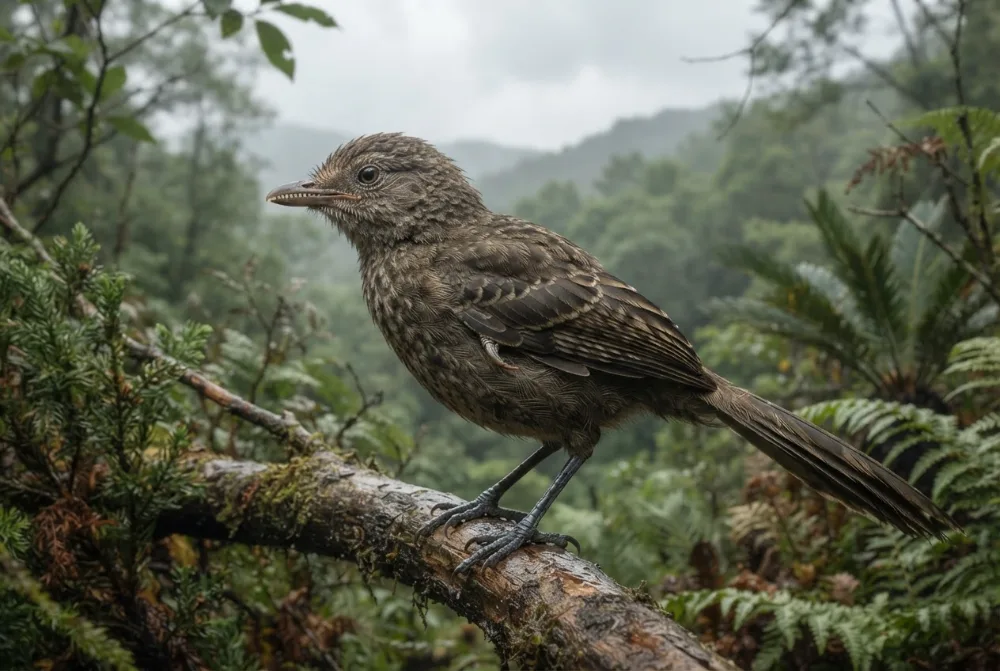
Kwiingcali zeedayinaso
- Igama lenzululwazi
- Sulcavis
- Inikwe igama ngu:
- O'Connor et al. 20133
- Iqela
- Iintaka zokuqala
- Usapho / iclade
- Bohaiornithidae3
- Ukuhlelwa
- Theropoda > Avialae3
- Ubudala bamatye
- 121 ukuya ku-113 izigidi zeminyaka (Aptian)3
- Izakhiwo zamatye
- Jiufotang3
- Amazwe
- iTshayina3
- Iirekhodi zeefosili
- 1 kwi-Paleobiology Database3
- Ukufunyanwa
- Sulcavis was named in 2013 by a team of scientists including Jingmai O'Connor. The fossil was found near Lamadong in Liaoning, China, and prepared by Maureen Walsh at the Natural History Museum of Los Angeles County.1
- Kusaxoxwa ngayo
- Scientists are not sure exactly what Sulcavis ate, but the strong grooved teeth suggest it could handle harder food than other early birds.12
Apho iinyani zivela khona
- Sulcavis (en.wikipedia.org)
- A new enantiornithine from the Yixian Formation with the first recognized avian enamel specialization: Journal of Vertebrate Paleontology: Vol 33, No 1 (tandfonline.com)
- Sulcavis in The Paleobiology Database (CC BY 4.0): ubudala, iindawo, izakhiwo zamatye, ukuhlelwa.
Yonke inyani ekweli phepha inenombolo ebonisa umthombo wayo. Ukuba siphosisile, uxolo, sithanda iidayinaso, asiyojenali yenzululwazi. Sixelele apha: [email protected], siya kuyilungisa.
 URex ulambile! I-Dino Wiki yiprojekthi katata ukwenzela unyana wakhe othanda iidayinaso, isimahla, ayinazintengiso, ayinazilandeli. Abantu abadala banokuphakela uRex isidlwana ukuze incede ihlale kwi-intanethi.Phakela uRex
 Archaeopteryx
 Hesperornis
 Ichthyornis
 Baptornis
 Jurapteryx
 Gobipteryx
 Stegosaurus
 Iguanodon
 Giganotosaurus
 Microraptor
 Deinonychus
 Baryonyx