 Woyɛ dino bɛn? Nsɛmmisa agoro
 Dino ko
 Dino mmirikatuo
 Dino agodie nketewa
 Stika nwoma
 Dino TOP nhyehyɛeɛ
 Ma me nwanwa!
Aymberedactylus
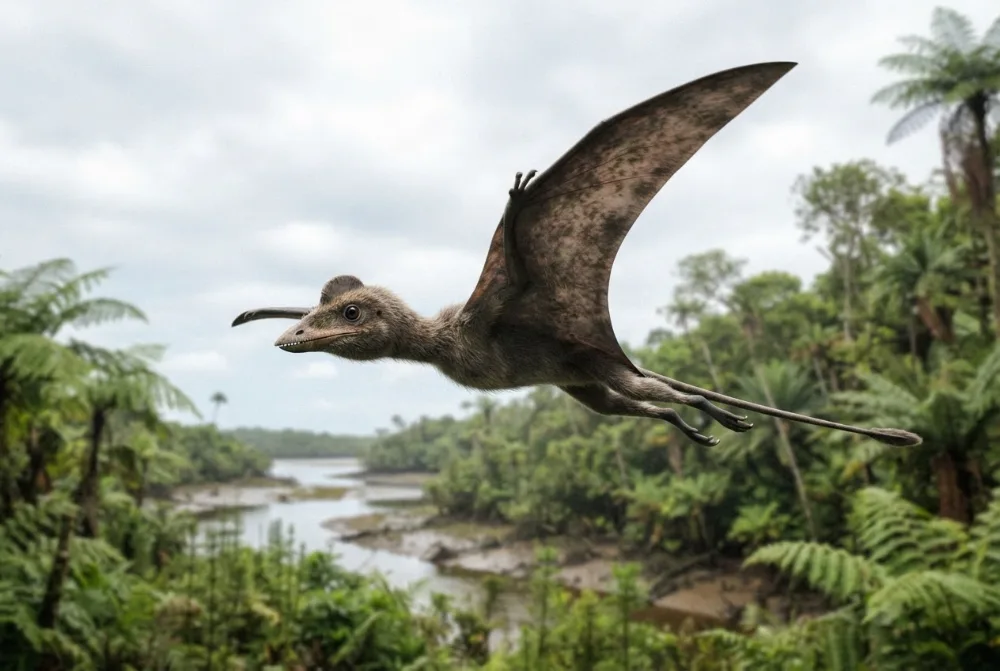
Aymberedactylus was a toothless flying reptile from the Early Cretaceous of Brazil. It had a short, downturned beak and probably ate fruits. Scientists think it was a small to medium-sized pterosaur with a wingspan of about 2 metres.1
Berɛ bɛn na ɛtenaa ase?
Na ne kɛseɛ yɛ sɛn?
Na ne ntaban trɛ sɛn?
 ne tenten te sɛ fie agyinamoa 4 firi hwene kɔsi dua⚽anka ɔbɛtumi atu atwa bɔɔlobɔ prama mũ wɔ sikɛn 7.9 mu
Aymberedactylus kɛseɛ yɛ sɛn sɛ wode toto WO ho a?
Akontaa nko ara wɔ wo browser mu. Yɛnkora biribiara so, na yɛmmfa biribiara nkɔ baabiara.
Na ɛyɛ ntɛm sɛn?


Nsɛm a ɛyɛ anigye
Aymberedactylus is only known from one almost complete lower jaw (mandible). No other bones have been found.1
Its lower jaw is 27 centimetres long and is completely toothless.1
It had a very long retroarticular process (a part of the jaw joint) that was about 7% of the whole jaw length.1
The jaw had a shallow, rough-textured pit on the splenial bone that is unique to this species.1
Aymberedactylus belongs to the Tapejarinae group, which are toothless pterosaurs that often had big crests on their heads.1
It lived about 119 to 113 million years ago in a coastal lagoon environment.4
Nsɛm a wɔbisa bebree fa Aymberedactylus ho
?What did Aymberedactylus eat?
It probably ate fruits. Scientists think it was a frugivore, like other tapejarine pterosaurs with downturned beaks.2
?How big was Aymberedactylus?
It had a wingspan of about 2 metres (6.5 feet), which is typical for tapejarid pterosaurs. The only known fossil is a 27 centimetre long lower jaw.32
?Was Aymberedactylus a dinosaur?
No, it was a pterosaur, a flying reptile that lived at the same time as dinosaurs but is not a dinosaur itself.3
Ma dino ho animdefoɔ
- Nyansahu din
- Aymberedactylus
- Obi a ɔtoo din
- Pegas et al. 20164
- Kuo
- Wim mmoa a wɔwea
- Abusua / kuo kɛseɛ
- Tapejaridae4
- Nkyekyɛmu
- Pterosauria > Pterodactyloidea4
- Abotan no mfeɛ
- mfeɛ ɔpepem 120 kɔsi 113 (Aptian)4
- Abotan nhyehyɛeɛ
- Crato4
- Aman
- Brazil4
- Fɔsil nkyerɛwee
- 1 wɔ The Paleobiology Database mu4
- Nhunumu
- Aymberedactylus cearensis was named in 2016 by R.V. Pêgas, M.E.C. Leal and A.W.A. Kellner based on a lower jaw found near Nova Olinda, Brazil. Its name means 'small lizard finger' from the Tupi language, referring to its small size and pterosaur features.1
- Wɔda so gye ho akyinnye
- Since only a lower jaw has been found, scientists are not sure about the exact shape of its head crest or its full body size.1
Baabi a nsɛm no firi
- A Basal Tapejarine (Pterosauria; Pterodactyloidea; Tapejaridae) from the Crato Formation, Early Cretaceous of Brazil (web.archive.org)
- A Basal Tapejarine (Pterosauria; Pterodactyloidea; Tapejaridae) from the Crato Formation, Early Cretaceous of Brazil | PLOS One (journals.plos.org)
- Aymberedactylus (en.wikipedia.org)
- Aymberedactylus in The Paleobiology Database (CC BY 4.0): mfeɛ, mmeaeɛ, abotan nhyehyɛeɛ, nkyekyɛmu.
Asɛm biara a ɛwɔ krataafa yi so wɔ nɔma a ɛkyerɛ baabi a ɛfiri. Sɛ yɛfom biribi a, kafra, yɛyɛ dino dɔfoɔ, yɛnyɛ nyansahu nsɛmma krataa. Ka kyerɛ yɛn wɔ [email protected] na yɛbɛsiesie.
 Ɔkɔm de Rex! Dino Wiki yɛ agya bi adwuma a ɔyɛɛ maa ne babarima a ɔdɔ dino. Ɛyɛ kwa, dawurubɔ biara nni mu, akyidifoɔ biara nni mu. Mpanimfoɔ bɛtumi ama Rex aduane kakra, na aboa ama Dino Wiki atena intanɛt so.Ma Rex aduane
 Pteranodon
 Quetzalcoatlus
 Dorygnathus
 Rhamphorhynchus
 Anhanguera
 Pterodactylus
 Stegosaurus
 Iguanodon
 Archaeopteryx
 Giganotosaurus
 Microraptor
 Deinonychus