 Woyɛ dino bɛn? Nsɛmmisa agoro
 Dino ko
 Dino mmirikatuo
 Dino agodie nketewa
 Stika nwoma
 Dino TOP nhyehyɛeɛ
 Ma me nwanwa!
Baminornis
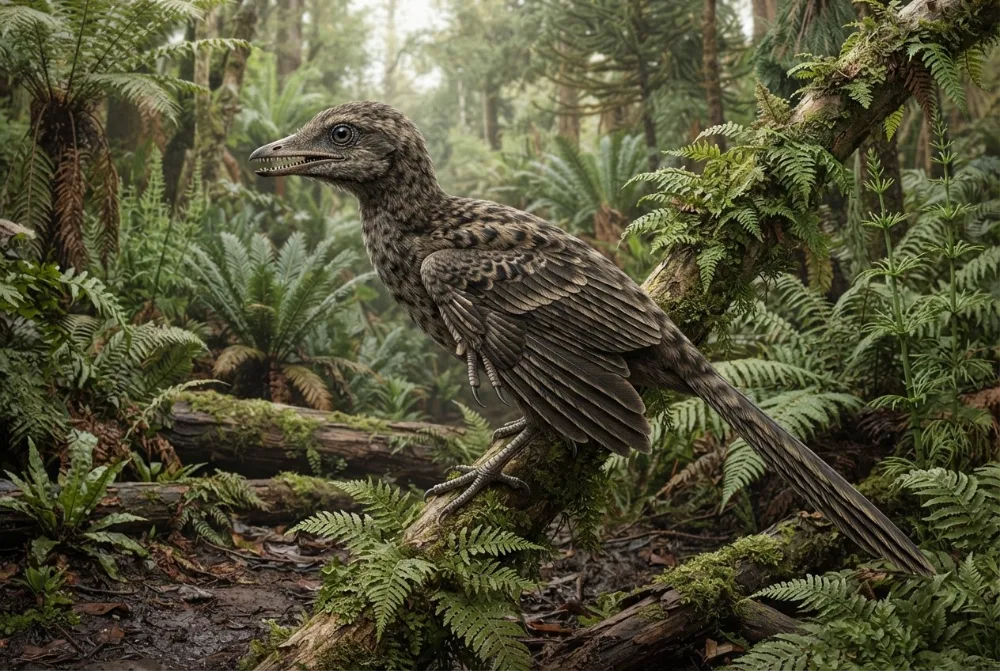
Baminornis was a tiny, early bird that lived about 150 million years ago in what is now China. It had a short tail with a fused bone called a pygostyle, making it one of the oldest short-tailed birds ever found. This little creature could probably fly better than its older cousin Archaeopteryx.21
Berɛ bɛn na ɛtenaa ase?
Na ne kɛseɛ yɛ sɛn?
Na ne mu yɛ duru sɛn?
Baminornis kɛseɛ yɛ sɛn sɛ wode toto WO ho a?
Akontaa nko ara wɔ wo browser mu. Yɛnkora biribiara so, na yɛmmfa biribiara nkɔ baabiara.
Na ɛyɛ ntɛm sɛn?


Nsɛm a ɛyɛ anigye
Baminornis had a fused tail bone called a pygostyle, which is a feature of modern birds and was very rare among Jurassic birds.21
It lived around 150 million years ago, during the Late Jurassic period, in a swampy environment.1
Baminornis was very small, weighing only about 130 to 300 grams, similar to a modern robin or sparrow.1
Its shoulder bones were not fused together, which may have helped it fly better than Archaeopteryx.1
The fossil of Baminornis was found in the Zhenghe Fauna, a site that also contained turtles, fish, and other early birds.1
Some scientists think the pygostyle of Baminornis might actually be part of its hip bone, not a tail bone, so its tail length is still debated.1
Nsɛm a wɔbisa bebree fa Baminornis ho
?Was Baminornis a dinosaur?
Yes, Baminornis is a type of bird-like dinosaur called an avialan. It is part of the dinosaur group Theropoda.1
?How big was Baminornis?
Baminornis was very small, weighing about 130 to 300 grams. That is similar to a modern robin or sparrow.1
?Did Baminornis have a short tail?
Scientists disagree. The first study said it had a short tail with a fused pygostyle, but later research suggests that bone might be part of the hip, so its tail length is still debated.1
?Could Baminornis fly?
Yes, Baminornis could probably fly better than its older cousin Archaeopteryx. Its shoulder bones were unfused, which may have helped its flight.1
Ma dino ho animdefoɔ
- Nyansahu din
- Baminornis
- Obi a ɔtoo din
- Chen et al. 20254
- Kuo
- Nnomaa a wɔdii kan
- Abusua / kuo kɛseɛ
- Avialae4
- Nkyekyɛmu
- Theropoda > Avialae4
- Abotan no mfeɛ
- mfeɛ ɔpepem 152 kɔsi 145 (Kimmeridgian / Tithonian)4
- Abotan nhyehyɛeɛ
- Nanyuan4
- Aman
- Kyaena4
- Fɔsil nkyerɛwee
- 1 wɔ The Paleobiology Database mu4
- Nhunumu
- Baminornis was named in 2025 by Chen and colleagues based on a partial skeleton found near Yangyuan Village in Zhenghe County, Fujian Province, China.1
- Wɔda so gye ho akyinnye
- Scientists are not sure whether the short tail of Baminornis evolved just once or multiple times in early birds.1
Baabi a nsɛm no firi
- Baminornis (en.wikipedia.org)
- Earliest short-tailed bird from the Late Jurassic of China | Nature (nature.com)
- PBDB Taxon (paleobiodb.org)
- Baminornis in The Paleobiology Database (CC BY 4.0): mfeɛ, mmeaeɛ, abotan nhyehyɛeɛ, nkyekyɛmu.
Asɛm biara a ɛwɔ krataafa yi so wɔ nɔma a ɛkyerɛ baabi a ɛfiri. Sɛ yɛfom biribi a, kafra, yɛyɛ dino dɔfoɔ, yɛnyɛ nyansahu nsɛmma krataa. Ka kyerɛ yɛn wɔ [email protected] na yɛbɛsiesie.
 Ɔkɔm de Rex! Dino Wiki yɛ agya bi adwuma a ɔyɛɛ maa ne babarima a ɔdɔ dino. Ɛyɛ kwa, dawurubɔ biara nni mu, akyidifoɔ biara nni mu. Mpanimfoɔ bɛtumi ama Rex aduane kakra, na aboa ama Dino Wiki atena intanɛt so.Ma Rex aduane
 Archaeopteryx
 Hesperornis
 Ichthyornis
 Baptornis
 Jurapteryx
 Gobipteryx
 Brachiosaurus
 Diplodocus
 Allosaurus
 Brontosaurus
 Compsognathus
 Camarasaurus