 Woyɛ dino bɛn? Nsɛmmisa agoro
 Dino ko
 Dino mmirikatuo
 Dino agodie nketewa
 Stika nwoma
 Dino TOP nhyehyɛeɛ
 Ma me nwanwa!
Ctenochasma
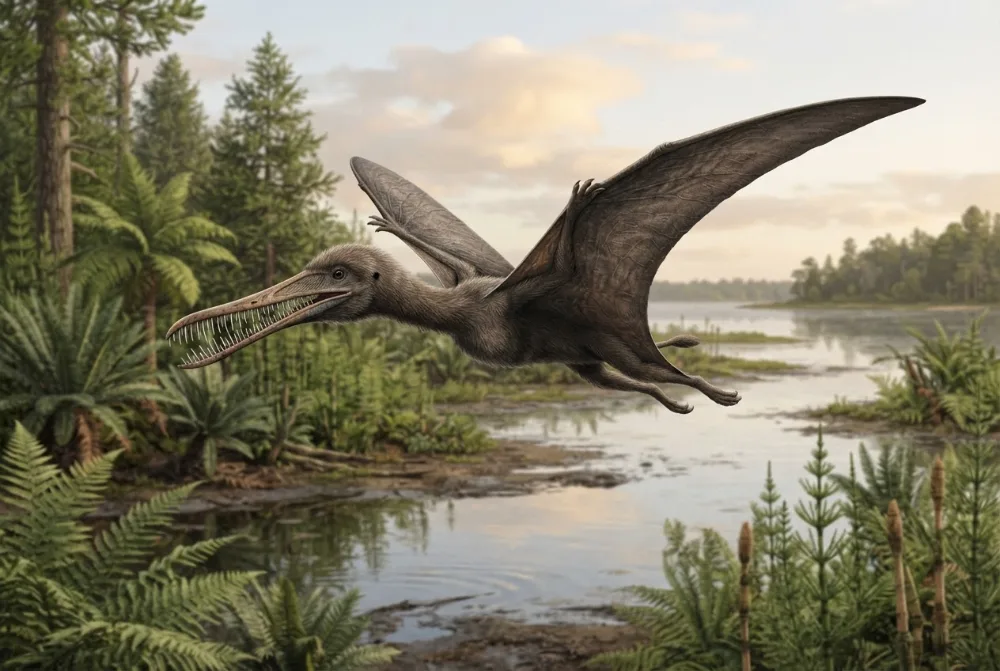
Ctenochasma was a flying reptile with a mouth full of hundreds of long, thin teeth that stuck out like a comb. It used its special beak to scoop up tiny animals from the water, like a spoonbill bird today.1
Berɛ bɛn na ɛtenaa ase?
Na ne kɛseɛ yɛ sɛn?
Na ne ntaban trɛ sɛn?
 ne tenten te sɛ fie agyinamoa 4 firi hwene kɔsi dua⚽anka ɔbɛtumi atu atwa bɔɔlobɔ prama mũ wɔ sikɛn 8 mu
Ctenochasma kɛseɛ yɛ sɛn sɛ wode toto WO ho a?
Akontaa nko ara wɔ wo browser mu. Yɛnkora biribiara so, na yɛmmfa biribiara nkɔ baabiara.
Na ɛyɛ ntɛm sɛn?


Nsɛm a ɛyɛ anigye
Ctenochasma had over 400 teeth in adults, all long, thin, and tightly packed together.1
Its teeth stuck outward from the jaws, forming a basket-like shape that helped catch small prey.1
Adult Ctenochasma had a bony crest on top of their skull, but young ones did not.1
Scientists think Ctenochasma was nocturnal, like some seabirds today, based on its eye bones.1
The smallest species, Ctenochasma elegans, had a wingspan of about 1.9 metres (6.2 feet) as an adult.1
Ctenochasma lived during the Late Jurassic period, around 150 to 145 million years ago.1
Nsɛm a wɔbisa bebree fa Ctenochasma ho
?Was Ctenochasma a dinosaur?
No, Ctenochasma was a pterosaur, which is a flying reptile and not a dinosaur.1
?How big was Ctenochasma?
The smallest species, Ctenochasma elegans, had a maximum wingspan of about 1.9 metres (6.2 feet) as an adult.1
?What did Ctenochasma eat?
It used its comb-like teeth to strain small invertebrates from the water, similar to how a spoonbill bird feeds today.1
?Did Ctenochasma have a crest?
Yes, adult Ctenochasma had a bony crest along the skull, but young ones did not.1
Ma dino ho animdefoɔ
- Nyansahu din
- Ctenochasma
- Obi a ɔtoo din
- Meyer 18512
- Kuo
- Wim mmoa a wɔwea
- Abusua / kuo kɛseɛ
- Lophocratia2
- Nkyekyɛmu
- Pterosauria > Pterodactyloidea2
- Abotan no mfeɛ
- mfeɛ ɔpepem 149 kɔsi 137 (Tithonian / Berriasian)2
- Abotan nhyehyɛeɛ
- Solnhofen, Solnhofener Plattenkalk, Calcaires tâchetés2
- Aman
- Gyaaman, Frɛnse2
- Fɔsil nkyerɛwee
- 7 wɔ The Paleobiology Database mu2
- Nhunumu
- German paleontologist Hermann von Meyer named Ctenochasma in 1851, based on a lower jaw full of teeth. He first thought it was a crocodilian, not a pterosaur.1
- Wɔda so gye ho akyinnye
- Scientists debate whether all the different species of Ctenochasma are really just growth stages of one species, but a 2007 study showed three distinct species based on tooth number and shape.1
Baabi a nsɛm no firi
- Ctenochasma (en.wikipedia.org)
- Ctenochasma in The Paleobiology Database (CC BY 4.0): mfeɛ, mmeaeɛ, abotan nhyehyɛeɛ, nkyekyɛmu.
Asɛm biara a ɛwɔ krataafa yi so wɔ nɔma a ɛkyerɛ baabi a ɛfiri. Sɛ yɛfom biribi a, kafra, yɛyɛ dino dɔfoɔ, yɛnyɛ nyansahu nsɛmma krataa. Ka kyerɛ yɛn wɔ [email protected] na yɛbɛsiesie.
 Ɔkɔm de Rex! Dino Wiki yɛ agya bi adwuma a ɔyɛɛ maa ne babarima a ɔdɔ dino. Ɛyɛ kwa, dawurubɔ biara nni mu, akyidifoɔ biara nni mu. Mpanimfoɔ bɛtumi ama Rex aduane kakra, na aboa ama Dino Wiki atena intanɛt so.Ma Rex aduane
 Pteranodon
 Quetzalcoatlus
 Dorygnathus
 Rhamphorhynchus
 Anhanguera
 Pterodactylus
 Stegosaurus
 Iguanodon
 Archaeopteryx
 Giganotosaurus
 Microraptor
 Deinonychus