 Woyɛ dino bɛn? Nsɛmmisa agoro
 Dino ko
 Dino mmirikatuo
 Dino agodie nketewa
 Stika nwoma
 Dino TOP nhyehyɛeɛ
 Ma me nwanwa!
Huanhepterus
Huanhepterus was a flying reptile that lived in China during the Early Cretaceous. It had a long, low skull with a crest on top and many slender teeth. Its wingspan was about as wide as a small car is long.12
Berɛ bɛn na ɛtenaa ase?
Na ne kɛseɛ yɛ sɛn?
Na ne tenten yɛ sɛn?
 ne tenten te sɛ fie agyinamoa 4 firi hwene kɔsi dua🍌ne tenten te sɛ kwadu 10 a wɔde abɔ toatoa so⚽anka ɔbɛtumi atu atwa bɔɔlobɔ prama mũ wɔ sikɛn 7.3 mu
Huanhepterus kɛseɛ yɛ sɛn sɛ wode toto WO ho a?
Akontaa nko ara wɔ wo browser mu. Yɛnkora biribiara so, na yɛmmfa biribiara nkɔ baabiara.
Na ɛyɛ ntɛm sɛn?


Nsɛm a ɛyɛ anigye
Huanhepterus was first discovered in May 1978 when a rock quarry explosion exposed a vertebra. The blast destroyed the right half of the fossil.21
It had about 26 pairs of teeth in the upper jaw and 25 in the lower jaw. The teeth were slender, sharp, and curved, and they became shorter toward the back of the mouth.21
Huanhepterus is very similar to Gnathosaurus, a pterosaur from the Late Jurassic of Europe. This helped scientists figure out that the rocks where Huanhepterus was found might be from the Jurassic-Cretaceous boundary.21
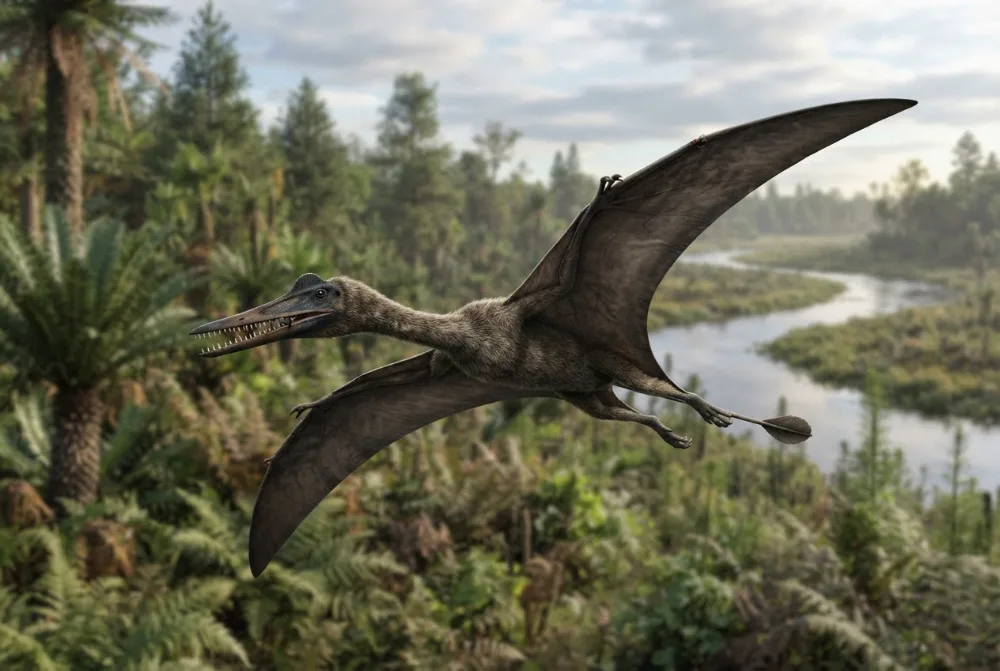
Ma dino ho animdefoɔ
- Nyansahu din
- Huanhepterus
- Obi a ɔtoo din
- Dong 19824
- Kuo
- Wim mmoa a wɔwea
- Abusua / kuo kɛseɛ
- Lophocratia4
- Nkyekyɛmu
- Pterosauria > Pterodactyloidea4
- Abotan no mfeɛ
- mfeɛ ɔpepem 137 kɔsi 100 (Valanginian / Albian)4
- Abotan nhyehyɛeɛ
- Huachi-Huanhe4
- Aman
- Kyaena4
- Fɔsil nkyerɛwee
- 1 wɔ The Paleobiology Database mu4
- Nhunumu
- Huanhepterus was named by Chinese paleontologist Dong Zhiming in 1982. The fossil was found by quarry workers in 1978, and Dong later visited the site to confirm it was a pterosaur.21
- Wɔda so gye ho akyinnye
- Scientists are not sure whether the rocks that contain Huanhepterus are from the Late Jurassic or the Early Cretaceous. The age is still debated.2
Baabi a nsɛm no firi
- Huanhepterus (en.wikipedia.org)
- A new pterosaur (Huanhepterus quingyangensis gen. et sp. nov.) from Ordos, China (naturalhistory.si.edu)
- The PTEROSAURIA - Huanhepterus (web.archive.org)
- Huanhepterus in The Paleobiology Database (CC BY 4.0): mfeɛ, mmeaeɛ, abotan nhyehyɛeɛ, nkyekyɛmu.
Asɛm biara a ɛwɔ krataafa yi so wɔ nɔma a ɛkyerɛ baabi a ɛfiri. Sɛ yɛfom biribi a, kafra, yɛyɛ dino dɔfoɔ, yɛnyɛ nyansahu nsɛmma krataa. Ka kyerɛ yɛn wɔ [email protected] na yɛbɛsiesie.
 Ɔkɔm de Rex! Dino Wiki yɛ agya bi adwuma a ɔyɛɛ maa ne babarima a ɔdɔ dino. Ɛyɛ kwa, dawurubɔ biara nni mu, akyidifoɔ biara nni mu. Mpanimfoɔ bɛtumi ama Rex aduane kakra, na aboa ama Dino Wiki atena intanɛt so.Ma Rex aduane
 Pteranodon
 Quetzalcoatlus
 Dorygnathus
 Rhamphorhynchus
 Anhanguera
 Pterodactylus
 Stegosaurus
 Iguanodon
 Archaeopteryx
 Giganotosaurus
 Microraptor
 Deinonychus