 Woyɛ dino bɛn? Nsɛmmisa agoro
 Dino ko
 Dino mmirikatuo
 Dino agodie nketewa
 Stika nwoma
 Dino TOP nhyehyɛeɛ
 Ma me nwanwa!
Palaeocursornis
Palaeocursornis was a small flying reptile, not a dinosaur. It lived during the Early Cretaceous period, about 143 to 137 million years ago. Its fossils were found in Romania, in a mine that was once a cave system.2
Berɛ bɛn na ɛtenaa ase?
Na ɛyɛ ntɛm sɛn?


Nsɛm a ɛyɛ anigye
Palaeocursornis was originally thought to be a bird, but later scientists determined it was a pterosaur, a flying reptile.21
Its name means 'ancient running bird', even though it was not a bird and not a runner. It flew instead.2
The only known fossil of Palaeocursornis is a partial thigh bone (femur). That makes it very hard to know exactly what it looked like.21
Some scientists think Palaeocursornis might not be a valid species at all. They call it a nomen dubium, which means a 'doubtful name'.21
The fossil was found in a bauxite mine in Romania, inside a lens of rock that was once part of an ancient cave system.1
The rock that held Palaeocursornis is between 143.1 and 137.05 million years old, from the Berriasian stage of the Early Cretaceous.2
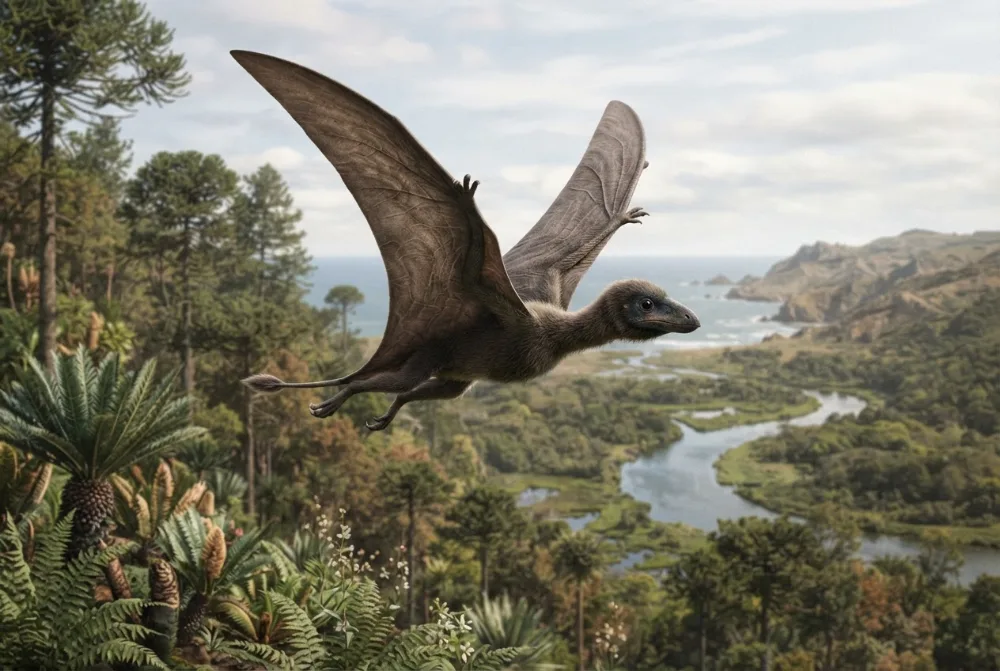
Ma dino ho animdefoɔ
- Nyansahu din
- Palaeocursornis
- Obi a ɔtoo din
- Kessler and Jurcsák 19862
- Kuo
- Wim mmoa a wɔwea
- Abusua / kuo kɛseɛ
- Pterosauria2
- Nkyekyɛmu
- Pterosauria2
- Abotan no mfeɛ
- mfeɛ ɔpepem 143 kɔsi 137 (Berriasian)2
- Abotan nhyehyɛeɛ
- Lower Bauxite2
- Aman
- Romania2
- Fɔsil nkyerɛwee
- 1 wɔ The Paleobiology Database mu2
- Nhunumu
- Palaeocursornis was named by Kessler and Jurcsák in 1986, based on a single thigh bone found in the Cornet bauxite mine in Romania.2
- Wɔda so gye ho akyinnye
- Scientists are not sure if Palaeocursornis is a valid species. Some think the single fossil bone is not enough to tell it apart from other pterosaurs.21
Baabi a nsɛm no firi
- Early Cretaceous (Berriasian) birds and pterosaurs from the Cornet bauxite mine, Romania (onlinelibrary.wiley.com)
- Palaeocursornis in The Paleobiology Database (CC BY 4.0): mfeɛ, mmeaeɛ, abotan nhyehyɛeɛ, nkyekyɛmu.
Asɛm biara a ɛwɔ krataafa yi so wɔ nɔma a ɛkyerɛ baabi a ɛfiri. Sɛ yɛfom biribi a, kafra, yɛyɛ dino dɔfoɔ, yɛnyɛ nyansahu nsɛmma krataa. Ka kyerɛ yɛn wɔ [email protected] na yɛbɛsiesie.
 Ɔkɔm de Rex! Dino Wiki yɛ agya bi adwuma a ɔyɛɛ maa ne babarima a ɔdɔ dino. Ɛyɛ kwa, dawurubɔ biara nni mu, akyidifoɔ biara nni mu. Mpanimfoɔ bɛtumi ama Rex aduane kakra, na aboa ama Dino Wiki atena intanɛt so.Ma Rex aduane
 Pteranodon
 Quetzalcoatlus
 Dorygnathus
 Rhamphorhynchus
 Anhanguera
 Pterodactylus
 Stegosaurus
 Iguanodon
 Archaeopteryx
 Giganotosaurus
 Microraptor
 Deinonychus