 Woyɛ dino bɛn? Nsɛmmisa agoro
 Dino ko
 Dino mmirikatuo
 Dino agodie nketewa
 Stika nwoma
 Dino TOP nhyehyɛeɛ
 Ma me nwanwa!
Petrodactyle
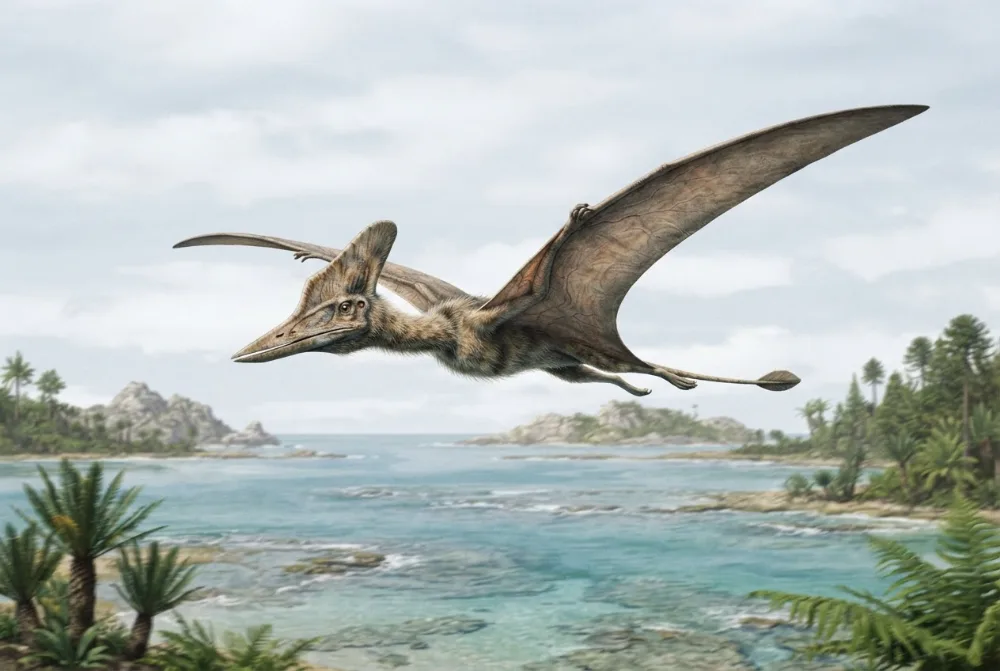
Petrodactyle was a flying reptile that lived in the Late Jurassic period, about 150 million years ago. It had a wingspan of about 2.1 metres (6.9 feet), making it one of the largest pterosaurs from the Solnhofen area of Germany. It also had one of the biggest bony crests on its head of any Jurassic pterosaur.1
Berɛ bɛn na ɛtenaa ase?
Na ne kɛseɛ yɛ sɛn?
Na ne ntaban trɛ sɛn?
 ne tenten te sɛ fie agyinamoa 4 firi hwene kɔsi dua⚽anka ɔbɛtumi atu atwa bɔɔlobɔ prama mũ wɔ sikɛn 7.9 mu
Petrodactyle kɛseɛ yɛ sɛn sɛ wode toto WO ho a?
Akontaa nko ara wɔ wo browser mu. Yɛnkora biribiara so, na yɛmmfa biribiara nkɔ baabiara.
Na ɛyɛ ntɛm sɛn?


Nsɛm a ɛyɛ anigye
Petrodactyle is one of the largest pterosaurs known from the Jurassic period, with a wingspan of about 2.1 metres (6.9 feet).1
It had a large bony crest on the back of its skull, which helped give it a powerful bite.1
Its teeth were short and spike-like, and only found in the front half of its jaws. This suggests it grabbed prey with a strong grip.1
Petrodactyle had long legs and could probably wade in shallow water to hunt.1
The only known fossil was found in 2010 in a public quarry in Germany. It is a mostly complete skeleton of a subadult.1
The name Petrodactyle means 'stone finger', a nod to the first pterosaur ever named, Pterodactylus.1
Nsɛm a wɔbisa bebree fa Petrodactyle ho
?What did Petrodactyle eat?
Petrodactyle was a carnivore, likely feeding on small fish, crustaceans, and other small prey. Its strong bite and spike-like teeth helped it grab slippery food.1
?How big was Petrodactyle?
Petrodactyle had a wingspan of about 2.1 metres (6.9 feet), making it one of the largest pterosaurs from the Solnhofen area and one of the largest Jurassic pterosaurs.21
?Where did Petrodactyle live?
Petrodactyle lived in what is now Germany about 150 million years ago, during the Late Jurassic. Its fossils were found in the Mörnsheim Formation in Bavaria.23
?Why did Petrodactyle have a crest?
The large bony crest on Petrodactyle's skull likely helped anchor jaw muscles, giving it a stronger bite. It may have also been used for display.1
Ma dino ho animdefoɔ
- Nyansahu din
- Petrodactyle
- Obi a ɔtoo din
- Hone et al. 20234
- Kuo
- Wim mmoa a wɔwea
- Abusua / kuo kɛseɛ
- Gallodactylidae4
- Nkyekyɛmu
- Pterosauria > Pterodactyloidea4
- Abotan no mfeɛ
- mfeɛ ɔpepem 149 kɔsi 145 (Tithonian)4
- Abotan nhyehyɛeɛ
- Mörnsheim4
- Aman
- Gyaaman4
- Fɔsil nkyerɛwee
- 1 wɔ The Paleobiology Database mu4
- Nhunumu
- Petrodactyle was named in 2023 by David Hone, René Lauer, and Frederik Spindler. The only known fossil was found in 2010 in a public quarry in Bavaria, Germany, by Günther Zehetner.1
- Wɔda so gye ho akyinnye
- Scientists are not sure exactly what Petrodactyle ate. It may have been a fish-eater, but its strong bite and worn tooth tips suggest it also ate hard-shelled animals like crustaceans.1
Baabi a nsɛm no firi
- A new Solnhofen pterosaur (palaeo-electronica.org)
- Petrodactyle (en.wikipedia.org)
- Jurassic Pterosaur Had Giant Bony Crest on Its Head | Sci.News (sci.news)
- Petrodactyle in The Paleobiology Database (CC BY 4.0): mfeɛ, mmeaeɛ, abotan nhyehyɛeɛ, nkyekyɛmu.
Asɛm biara a ɛwɔ krataafa yi so wɔ nɔma a ɛkyerɛ baabi a ɛfiri. Sɛ yɛfom biribi a, kafra, yɛyɛ dino dɔfoɔ, yɛnyɛ nyansahu nsɛmma krataa. Ka kyerɛ yɛn wɔ [email protected] na yɛbɛsiesie.
 Ɔkɔm de Rex! Dino Wiki yɛ agya bi adwuma a ɔyɛɛ maa ne babarima a ɔdɔ dino. Ɛyɛ kwa, dawurubɔ biara nni mu, akyidifoɔ biara nni mu. Mpanimfoɔ bɛtumi ama Rex aduane kakra, na aboa ama Dino Wiki atena intanɛt so.Ma Rex aduane
 Pteranodon
 Quetzalcoatlus
 Dorygnathus
 Rhamphorhynchus
 Anhanguera
 Pterodactylus
 Brachiosaurus
 Diplodocus
 Allosaurus
 Brontosaurus
 Compsognathus
 Camarasaurus