 Woyɛ dino bɛn? Nsɛmmisa agoro
 Dino ko
 Dino mmirikatuo
 Dino agodie nketewa
 Stika nwoma
 Dino TOP nhyehyɛeɛ
 Ma me nwanwa!
Pterodaustro
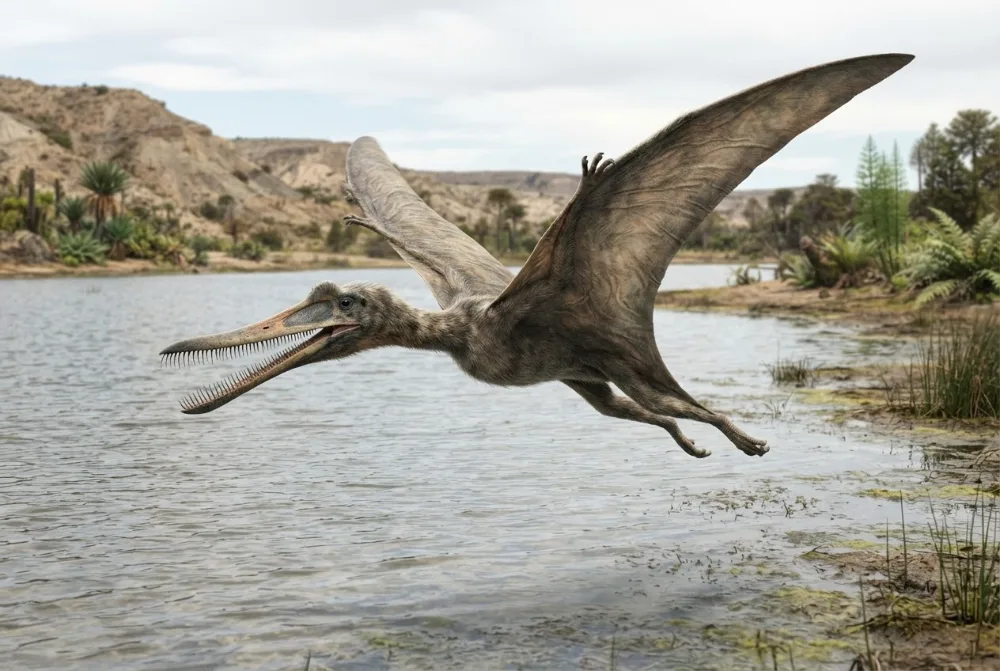
Pterodaustro was a flying reptile that lived near lakes in what is now Argentina. It had a weird mouth with about 1,000 long, bristle-like teeth in its lower jaw, just like a comb! It used those teeth to strain tiny shrimp and other small animals from the water, just like flamingos do today.12
Berɛ bɛn na ɛtenaa ase?
Na ne kɛseɛ yɛ sɛn?
Na ne ntaban trɛ sɛn?
Na ne mu yɛ duru sɛn?

 ntaban trɛ sɛ sakre 1.5 a ɛtoatoa so🍌ne mu duru te sɛ kwadu 77⚽anka ɔbɛtumi atu atwa bɔɔlobɔ prama mũ wɔ sikɛn 6.8 mu
Pterodaustro kɛseɛ yɛ sɛn sɛ wode toto WO ho a?
Akontaa nko ara wɔ wo browser mu. Yɛnkora biribiara so, na yɛmmfa biribiara nkɔ baabiara.
Na ɛyɛ ntɛm sɛn?


Nsɛm a ɛyɛ anigye
Pterodaustro had about 1,000 teeth in its lower jaw, each only 0.2 to 0.3 millimeters wide. That's thinner than a human hair!12
Scientists have found over 750 fossils of Pterodaustro, including eggs and embryos, making it one of the best-known pterosaurs.1
Pterodaustro had a long tail with 22 vertebrae, which is unusual for a pterodactyloid pterosaur. Most others have at most 16.1
Two Pterodaustro fossils were found with gizzard stones in their stomachs. These are the first gizzard stones ever reported for any pterosaur.1
Pterodaustro may have been pink like a flamingo! Its diet of tiny crustaceans could have given it a pink color, just like flamingos get from eating brine shrimp.12
Pterodaustro had a hard time taking off from the ground. Because of its long body and short legs, it needed a lot of open space to launch, like modern geese and swans.1
Juvenile Pterodaustro grew quickly in their first two years, reaching about half of adult size. They then grew more slowly for four to five years until they were fully grown.1
Nsɛm a wɔbisa bebree fa Pterodaustro ho
?How big was Pterodaustro?
It had a wingspan of about 3 metres (9 ft 10 in) and weighed about 9.2 kilograms (20 lb).1
?What did Pterodaustro eat?
It ate tiny shrimp, crustaceans, and other small water animals. It used its comb-like teeth to strain them from the water, just like flamingos do.214
?Could Pterodaustro swim?
Yes, it had a long body and large, splayed feet that were adaptations for swimming and wading in lakes.1
Atosɛm sɛefoɔ
Atosɛm: Pterodaustro was a dinosaur.
Nokorɛ: Pterodaustro was a pterosaur, a flying reptile that lived at the same time as dinosaurs but is not a dinosaur.1
Ma dino ho animdefoɔ
- Nyansahu din
- Pterodaustro
- Obi a ɔtoo din
- Bonaparte 19705
- Kuo
- Wim mmoa a wɔwea
- Abusua / kuo kɛseɛ
- Lophocratia5
- Nkyekyɛmu
- Pterosauria > Pterodactyloidea5
- Abotan no mfeɛ
- mfeɛ ɔpepem 121 kɔsi 100 (Aptian / Albian)5
- Abotan nhyehyɛeɛ
- Lagarcito, La Cruz5
- Aman
- Argentina5
- Fɔsil nkyerɛwee
- 2 wɔ The Paleobiology Database mu5
- Nhunumu
- The first fossils of Pterodaustro were discovered in the late 1960s by paleontologist José Bonaparte in the Lagarcito Formation of San Luis Province, Argentina. Bonaparte named the genus in 1970, with the species name P. guinazui honoring Román Guiñazú.1
- Wɔda so gye ho akyinnye
- Scientists are still debating whether Pterodaustro was actually pink like a flamingo. While its diet suggests it could have been, no direct fossil evidence of color has been found.12
Baabi a nsɛm no firi
- Pterodaustro (en.wikipedia.org)
- Pterosaur of the Day: Pterodaustro | AMNH (amnh.org)
- PBDB Taxon (paleobiodb.org)
- Pterodaustro guinazui (amnh.org)
- Pterodaustro in The Paleobiology Database (CC BY 4.0): mfeɛ, mmeaeɛ, abotan nhyehyɛeɛ, nkyekyɛmu.
Asɛm biara a ɛwɔ krataafa yi so wɔ nɔma a ɛkyerɛ baabi a ɛfiri. Sɛ yɛfom biribi a, kafra, yɛyɛ dino dɔfoɔ, yɛnyɛ nyansahu nsɛmma krataa. Ka kyerɛ yɛn wɔ [email protected] na yɛbɛsiesie.
 Ɔkɔm de Rex! Dino Wiki yɛ agya bi adwuma a ɔyɛɛ maa ne babarima a ɔdɔ dino. Ɛyɛ kwa, dawurubɔ biara nni mu, akyidifoɔ biara nni mu. Mpanimfoɔ bɛtumi ama Rex aduane kakra, na aboa ama Dino Wiki atena intanɛt so.Ma Rex aduane
 Pteranodon
 Quetzalcoatlus
 Dorygnathus
 Rhamphorhynchus
 Anhanguera
 Pterodactylus
 Stegosaurus
 Iguanodon
 Archaeopteryx
 Giganotosaurus
 Microraptor
 Deinonychus