 Woyɛ dino bɛn? Nsɛmmisa agoro
 Dino ko
 Dino mmirikatuo
 Dino agodie nketewa
 Stika nwoma
 Dino TOP nhyehyɛeɛ
 Ma me nwanwa!
Santanadactylus
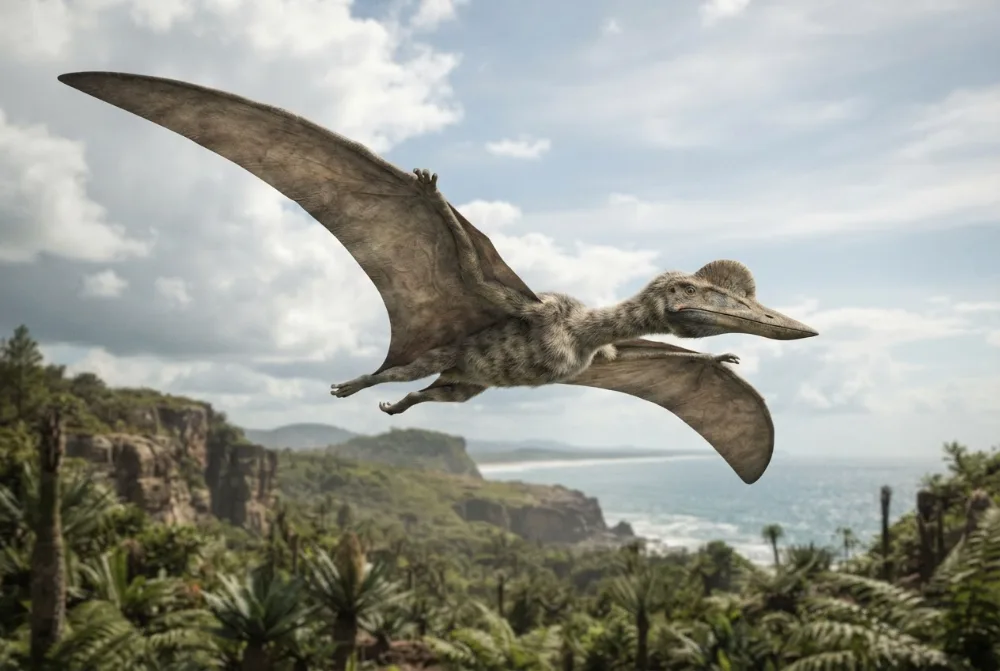
Santanadactylus was a huge flying reptile that soared over ancient Brazil. It had a long neck and wings that could stretch as wide as a small airplane. It likely glided over the sea, snatching fish with its beak.13
Berɛ bɛn na ɛtenaa ase?
Na ne kɛseɛ yɛ sɛn?
Na ne ntaban trɛ sɛn?
 ntaban trɛ sɛ sakre 3 a ɛtoatoa so⚽anka ɔbɛtumi atu atwa bɔɔlobɔ prama mũ wɔ sikɛn 5.1 mu
Santanadactylus kɛseɛ yɛ sɛn sɛ wode toto WO ho a?
Akontaa nko ara wɔ wo browser mu. Yɛnkora biribiara so, na yɛmmfa biribiara nkɔ baabiara.
Na ɛyɛ ntɛm sɛn?


Nsɛm a ɛyɛ anigye
Santanadactylus was named in 1980 by Dutch paleontologist Paul de Buisonjé.1
The name Santanadactylus means 'Santana Formation finger', referring to the rock layer where it was found.1
Four species were once placed in this genus, but scientists now think most belong to other pterosaur groups.1
The type species is Santanadactylus brasilensis, named after Brazil.1
Some scientists think Santanadactylus may have been a glider, using its long wings to soar without flapping much.1
The fossils of Santanadactylus were found in chalk nodules that were bought from collectors.1
Many of the Santanadactylus species are now considered doubtful because the fossils are too incomplete.1
Nsɛm a wɔbisa bebree fa Santanadactylus ho
?How big was Santanadactylus?
It was a large pterosaur with a wingspan estimated between 2.9 and 5.7 metres (9.5 to 18.7 ft), and some scientists think Santanadactylus brasilensis reached 6 metres (20 ft).12
?What did Santanadactylus eat?
It was a piscivore, meaning it ate fish. It likely glided over the sea and snatched fish with its beak.3
Atosɛm sɛefoɔ
Atosɛm: Santanadactylus was a dinosaur.
Nokorɛ: Santanadactylus was a pterosaur, a flying reptile that lived at the same time as dinosaurs but is not a dinosaur.1
Ma dino ho animdefoɔ
- Nyansahu din
- Santanadactylus
- Obi a ɔtoo din
- Buisonjé 19803
- Kuo
- Wim mmoa a wɔwea
- Abusua / kuo kɛseɛ
- Pteranodontidae3
- Nkyekyɛmu
- Pterosauria > Pterodactyloidea > Pteranodontidae3
- Abotan no mfeɛ
- mfeɛ ɔpepem 120 kɔsi 113 (Aptian)3
- Abotan nhyehyɛeɛ
- Romualdo3
- Aman
- Brazil3
- Fɔsil nkyerɛwee
- 2 wɔ The Paleobiology Database mu3
- Nhunumu
- Santanadactylus was named by Dutch paleontologist Paul de Buisonjé in 1980, based on a partial wing bone and shoulder blade found in Brazil.1
- Wɔda so gye ho akyinnye
- Scientists are not sure which species really belong to Santanadactylus, because the fossils are so fragmentary.1
Baabi a nsɛm no firi
- Santanadactylus (en.wikipedia.org)
- Natuurtijdschriften: Santanadactylus brasilensis (natuurtijdschriften.nl)
- Santanadactylus in The Paleobiology Database (CC BY 4.0): mfeɛ, mmeaeɛ, abotan nhyehyɛeɛ, nkyekyɛmu.
Asɛm biara a ɛwɔ krataafa yi so wɔ nɔma a ɛkyerɛ baabi a ɛfiri. Sɛ yɛfom biribi a, kafra, yɛyɛ dino dɔfoɔ, yɛnyɛ nyansahu nsɛmma krataa. Ka kyerɛ yɛn wɔ [email protected] na yɛbɛsiesie.
 Ɔkɔm de Rex! Dino Wiki yɛ agya bi adwuma a ɔyɛɛ maa ne babarima a ɔdɔ dino. Ɛyɛ kwa, dawurubɔ biara nni mu, akyidifoɔ biara nni mu. Mpanimfoɔ bɛtumi ama Rex aduane kakra, na aboa ama Dino Wiki atena intanɛt so.Ma Rex aduane
 Pteranodon
 Quetzalcoatlus
 Dorygnathus
 Rhamphorhynchus
 Anhanguera
 Pterodactylus
 Stegosaurus
 Iguanodon
 Archaeopteryx
 Giganotosaurus
 Microraptor
 Deinonychus