 Woyɛ dino bɛn? Nsɛmmisa agoro
 Dino ko
 Dino mmirikatuo
 Dino agodie nketewa
 Stika nwoma
 Dino TOP nhyehyɛeɛ
 Ma me nwanwa!
Sinomacrops
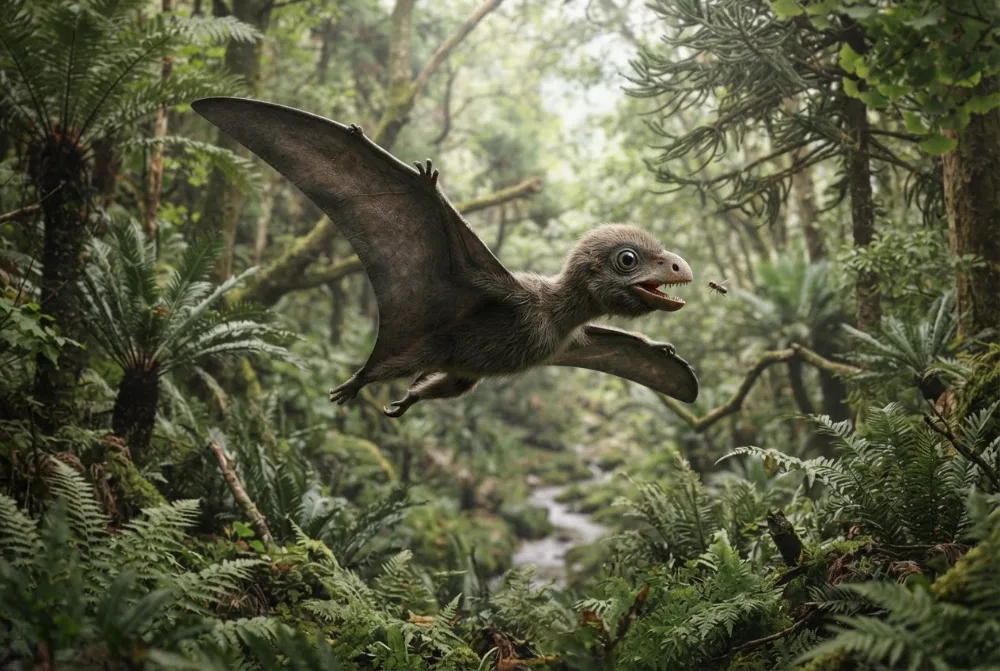
Sinomacrops was a tiny flying reptile that lived about 160 million years ago. It had huge eyes and a short, rounded snout, and it probably fluttered between trees catching insects.1
Berɛ bɛn na ɛtenaa ase?
Na ne kɛseɛ yɛ sɛn?
Na ne tenten yɛ sɛn?
Sinomacrops kɛseɛ yɛ sɛn sɛ wode toto WO ho a?
Akontaa nko ara wɔ wo browser mu. Yɛnkora biribiara so, na yɛmmfa biribiara nkɔ baabiara.
Na ɛyɛ ntɛm sɛn?


Nsɛm a ɛyɛ anigye
Sinomacrops is known from a single crushed skeleton, but it is the first anurognathid skull seen from the side.1
Its lower leg bone, the tibiotarsus, was twice as long as its thigh bone, which is unusual.1
It had three closely spaced teeth in the front of its upper jaw, a feature unique to this species.1
Sinomacrops is the second anurognathid pterosaur found in the Tiaojishan Formation in China.1
Its closest relative is Batrachognathus, and together they form a group called Batrachognathinae.1
The fossil was found in rocks that are between 165 and 155 million years old, from the Middle to Late Jurassic.3
Nsɛm a wɔbisa bebree fa Sinomacrops ho
?Was Sinomacrops a dinosaur?
No, Sinomacrops was a pterosaur, a flying reptile that lived at the same time as dinosaurs, but it was not a dinosaur itself.2
?How big was Sinomacrops?
It was tiny, but the exact size is not known because only one crushed skeleton has been found. It was small enough to flutter between trees.2
?What did Sinomacrops eat?
It probably ate insects. Its short snout and teeth suggest it caught bugs while flying, like other anurognathid pterosaurs.1
?When did Sinomacrops live?
It lived about 164 to 158 million years ago, during the Middle to Late Jurassic period.2
Atosɛm sɛefoɔ
Atosɛm: Some people think Sinomacrops was a dinosaur because it lived with dinosaurs.
Nokorɛ: Sinomacrops was a pterosaur, a flying reptile, not a dinosaur.1
Ma dino ho animdefoɔ
- Nyansahu din
- Sinomacrops
- Obi a ɔtoo din
- Wei et al. 20213
- Kuo
- Wim mmoa a wɔwea
- Abusua / kuo kɛseɛ
- Anurognathidae3
- Nkyekyɛmu
- Pterosauria3
- Abotan no mfeɛ
- mfeɛ ɔpepem 165 kɔsi 155 (Callovian / Oxfordian)3
- Abotan nhyehyɛeɛ
- Tiaojishan3
- Aman
- Kyaena3
- Fɔsil nkyerɛwee
- 1 wɔ The Paleobiology Database mu3
- Nhunumu
- Scientists named Sinomacrops in 2021 after studying a fossil found at Mutoudeng in China. The species name bondei honors paleontologist Niels Bonde.1
- Wɔda so gye ho akyinnye
- Scientists still debate exactly where anurognathids like Sinomacrops fit in the pterosaur family tree, and whether they lived mostly in trees.1
Baabi a nsɛm no firi
- Sinomacrops bondei , a new anurognathid pterosaur from the Jurassic of China and comments on the group (pmc.ncbi.nlm.nih.gov)
- Sinomacrops (en.wikipedia.org)
- Sinomacrops in The Paleobiology Database (CC BY 4.0): mfeɛ, mmeaeɛ, abotan nhyehyɛeɛ, nkyekyɛmu.
Asɛm biara a ɛwɔ krataafa yi so wɔ nɔma a ɛkyerɛ baabi a ɛfiri. Sɛ yɛfom biribi a, kafra, yɛyɛ dino dɔfoɔ, yɛnyɛ nyansahu nsɛmma krataa. Ka kyerɛ yɛn wɔ [email protected] na yɛbɛsiesie.
 Ɔkɔm de Rex! Dino Wiki yɛ agya bi adwuma a ɔyɛɛ maa ne babarima a ɔdɔ dino. Ɛyɛ kwa, dawurubɔ biara nni mu, akyidifoɔ biara nni mu. Mpanimfoɔ bɛtumi ama Rex aduane kakra, na aboa ama Dino Wiki atena intanɛt so.Ma Rex aduane
 Pteranodon
 Quetzalcoatlus
 Dorygnathus
 Rhamphorhynchus
 Anhanguera
 Pterodactylus
 Brachiosaurus
 Diplodocus
 Allosaurus
 Brontosaurus
 Compsognathus
 Camarasaurus