 Woyɛ dino bɛn? Nsɛmmisa agoro
 Dino ko
 Dino mmirikatuo
 Dino agodie nketewa
 Stika nwoma
 Dino TOP nhyehyɛeɛ
 Ma me nwanwa!
Sinopterus
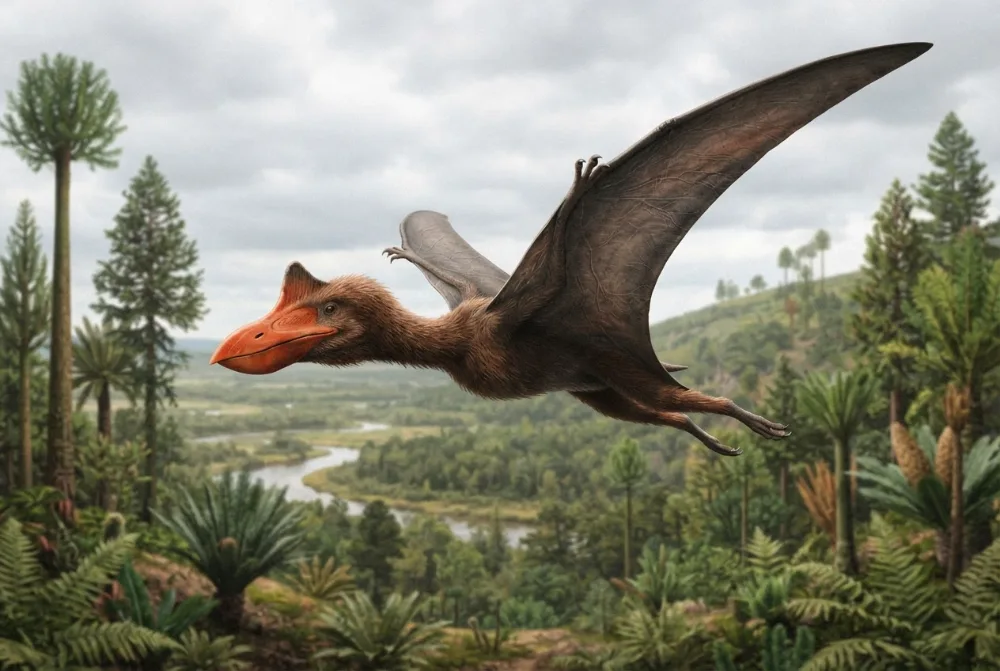
Sinopterus was a flying reptile with a big, toothless beak like a parrot. It lived in China during the Early Cretaceous, about 120 million years ago, and probably ate plants and seeds.13
Berɛ bɛn na ɛtenaa ase?
Na ne kɛseɛ yɛ sɛn?
Na ne ntaban trɛ sɛn?
Na ne mu yɛ duru sɛn?
 ne tenten te sɛ fie agyinamoa 4 firi hwene kɔsi duane mu duru bɛyɛ sɛ fie agyinamoa🍌ne mu duru te sɛ kwadu 24⚽anka ɔbɛtumi atu atwa bɔɔlobɔ prama mũ wɔ sikɛn 8 mu
Sinopterus kɛseɛ yɛ sɛn sɛ wode toto WO ho a?
Akontaa nko ara wɔ wo browser mu. Yɛnkora biribiara so, na yɛmmfa biribiara nkɔ baabiara.
Na ɛyɛ ntɛm sɛn?


Nsɛm a ɛyɛ anigye
Sinopterus had a long, bony crest on top of its skull that pointed backward like a spike.1
Its beak had no teeth, similar to modern birds and some other pterosaurs.1
Scientists found tiny plant fossils (phytoliths) in the stomach of a Sinopterus, proving it ate plants.1
Sinopterus also swallowed small stones (gastroliths) to help grind up tough plant food in its gizzard.1
It was one of the first tapejarid pterosaurs found outside Brazil, showing these flying reptiles lived in many places.1
The largest Sinopterus had a wingspan of about 1.9 metres (6.2 feet) and weighed around 2.9 kilograms (6.3 pounds).1
Many scientists now think that only one species of Sinopterus is valid: Sinopterus dongi.2
Nsɛm a wɔbisa bebree fa Sinopterus ho
?Was Sinopterus a dinosaur?
No, Sinopterus was a pterosaur, a flying reptile, not a dinosaur.1
?How big was Sinopterus?
The largest Sinopterus had a wingspan of about 1.9 metres and weighed around 2.9 kilograms. The type specimen had a skull 17 centimetres long.1
?What did Sinopterus eat?
Sinopterus was a herbivore. Scientists found plant fossils and gastroliths in its stomach, showing it ate seeds, grains, and other plants.1
?Did Sinopterus have teeth?
No, Sinopterus had a toothless, bird-like beak similar to a parrot.1
?When did Sinopterus live?
Sinopterus lived during the Early Cretaceous period, about 120 million years ago.1
?Why did Sinopterus have a crest?
The long bony crest on its skull may have been used for display, such as attracting mates or recognizing other members of its species. Scientists are not completely sure.1
Atosɛm sɛefoɔ
Atosɛm: Some people think Sinopterus ate fish or insects like many other pterosaurs.
Nokorɛ: Stomach contents show Sinopterus was a plant-eater, with no fish bones or insect shells found.1
Ma dino ho animdefoɔ
- Nyansahu din
- Sinopterus
- Obi a ɔtoo din
- Wang and Zhou 20023
- Kuo
- Wim mmoa a wɔwea
- Abusua / kuo kɛseɛ
- Tapejaridae3
- Nkyekyɛmu
- Pterosauria > Pterodactyloidea3
- Abotan no mfeɛ
- mfeɛ ɔpepem 121 kɔsi 113 (Aptian)3
- Abotan nhyehyɛeɛ
- Jiufotang3
- Aman
- Kyaena3
- Fɔsil nkyerɛwee
- 3 wɔ The Paleobiology Database mu3
- Nhunumu
- Sinopterus was named in 2002 by Chinese paleontologists Wang Xiaolin and Zhou Zhonghe, based on a nearly complete skeleton found in Liaoning, China.13
- Wɔda so gye ho akyinnye
- Scientists still debate how many different species of Sinopterus existed, because the crests and sizes vary a lot among fossils.2
Baabi a nsɛm no firi
- Sinopterus (en.wikipedia.org)
- PeerJ A taxonomic revision of the Sinopterus complex (Pterosauria, Tapejaridae) from the Early Cretaceous Jehol Biota, with the new genus Huaxiadraco (peerj.com)
- Sinopterus in The Paleobiology Database (CC BY 4.0): mfeɛ, mmeaeɛ, abotan nhyehyɛeɛ, nkyekyɛmu.
Asɛm biara a ɛwɔ krataafa yi so wɔ nɔma a ɛkyerɛ baabi a ɛfiri. Sɛ yɛfom biribi a, kafra, yɛyɛ dino dɔfoɔ, yɛnyɛ nyansahu nsɛmma krataa. Ka kyerɛ yɛn wɔ [email protected] na yɛbɛsiesie.
 Ɔkɔm de Rex! Dino Wiki yɛ agya bi adwuma a ɔyɛɛ maa ne babarima a ɔdɔ dino. Ɛyɛ kwa, dawurubɔ biara nni mu, akyidifoɔ biara nni mu. Mpanimfoɔ bɛtumi ama Rex aduane kakra, na aboa ama Dino Wiki atena intanɛt so.Ma Rex aduane
 Pteranodon
 Quetzalcoatlus
 Dorygnathus
 Rhamphorhynchus
 Anhanguera
 Pterodactylus
 Stegosaurus
 Iguanodon
 Archaeopteryx
 Giganotosaurus
 Microraptor
 Deinonychus