 Ati daayinoo kami? Qormaata
 Lola daayinoo
 Dorgommii daayinoo
 Taphoota daayinoo xixiqqoo
 Albamii istiikarii
 Tarreewwan TOP daayinoo
 Na dinqisiisi!
Dearc
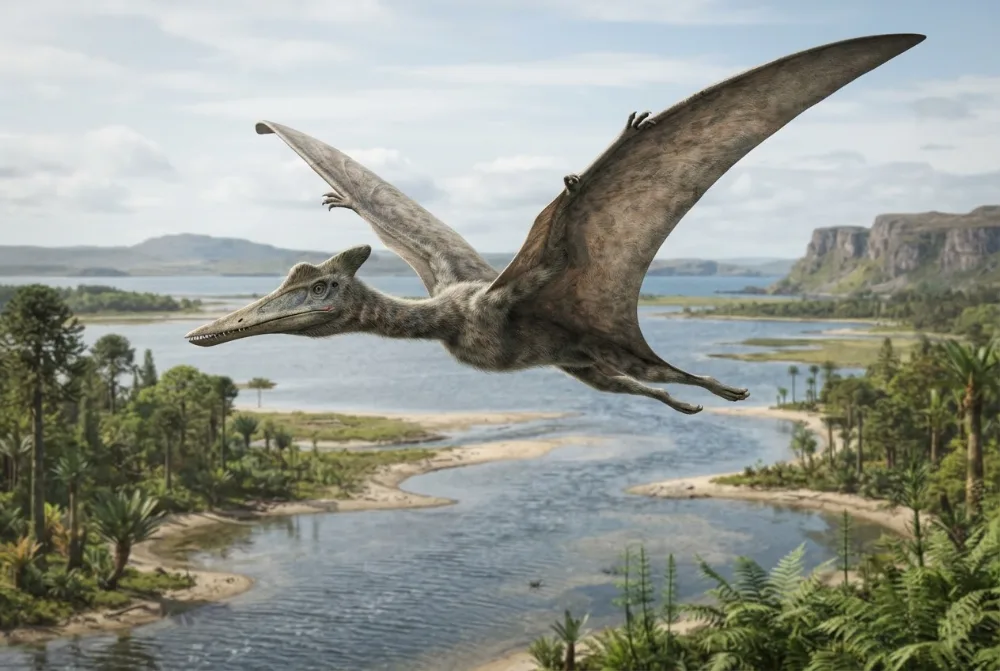
Dearc was a flying reptile that lived in the Middle Jurassic, about 167 million years ago. It was one of the biggest flying animals of its time, with wings as wide as a small car! It soared over the lagoons of what is now Scotland.1
Yoom jiraate?
Hammam guddaa ture?
Baalleen isaa hammam bal'aa turan?
 baallee akka saayikilii 1.5 tarreen bal'aa⚽dirree kubbaa miilaa guutuu sekondii 7.3 keessatti balali'ee ce'uu danda'a
SI wajjin yoo wal bira qabamu, Dearc hammam guddaa ture?
Herrega qofa barbaadduu kee keessatti. Wanti tokkollee hin olkaa'amu, eessayyuu hin ergamu.
Hammam saffisaa ture?


Odeeffannoowwan bashannansiisoo
Dearc was not fully grown when it died. It was a juvenile or subadult, still actively growing, so adults might have been even bigger.13
Its wingspan was about 2.5 to 3 metres (8 to 10 feet), as wide as a wandering albatross, the largest flying bird today.1
Before Dearc was discovered, scientists thought pterosaurs stayed small until the Cretaceous period. Dearc shows they got big much earlier.13
The fossil was found at Brothers' Point on the Isle of Skye in 2017, during a National Geographic-funded field trip.1
Its name comes from Scottish Gaelic and means both 'winged reptile' and 'reptile from Skye', because Skye is called the 'winged isle'.1
Dearc had a long, low skull and a slender upper arm bone, which helped it fly.1
Gaaffiiwwan waa'ee Dearc baay'ee gaafataman
?How big was Dearc?
Dearc had a wingspan of about 2.5 to 3 metres, as wide as a wandering albatross, the largest flying bird today. It was not fully grown when it died, so adults might have been even bigger.34
?When did Dearc live?
Dearc lived in the Middle Jurassic, about 167 million years ago.3
?Where was Dearc found?
The fossil was found at Brothers' Point on the Isle of Skye in Scotland in 2017.3
?What did Dearc eat?
Dearc had two types of teeth: long fangs at the front and peg-like teeth further back, which suggests it ate fish or other small animals.3
?Is Dearc a dinosaur?
No, Dearc is a pterosaur, a flying reptile, not a dinosaur.3
Ogeeyyii daayinootiif
- Maqaa saayinsii
- Dearc
- Kan maqaa baase
- Jagielska et al. 20226
- Garee
- Harkifattoota balali'an
- Maatii / kilaadii
- Rhamphorhynchidae6
- Ramaddii
- Pterosauria > Rhamphorhynchidae6
- Umurii dhagaawwanii
- waggaa miliyoona 168 hanga 165 (Bathonian)6
- Caasaawwan dhagaa
- Lealt Shale6
- Biyyoota
- Biriteen6
- Galmee fosilii
- 1 The Paleobiology Database keessa6
- Argannoo
- The first Dearc fossil was discovered on May 23, 2017, at Brothers' Point on the Isle of Skye, Scotland, by a team led by Stephen Brusatte. It was named Dearc sgiathanach by Jagielska and colleagues in 2022.1
- Ammallee falmisiisaa
- Scientists are not sure exactly how big Dearc could grow, because the only known fossil is from a young animal that was still growing.1
Odeeffannoon eessaa dhufa
- A skeleton from the Middle Jurassic of Scotland illuminates an earlier origin of large pterosaurs: Current Biology (cell.com)
- PBDB Taxon (paleobiodb.org)
- Dearc (en.wikipedia.org)
- Report A skeleton from the Middle Jurassic of Scotland illuminates an earlier origin of large pterosaurs (sciencedirect.com)
- Jurassic Dearc | Nature Ecology & Evolution (nature.com)
- Dearc in The Paleobiology Database (CC BY 4.0): umurii, bakkeewwan, caasaawwan dhagaa, ramaddii.
Odeeffannoon fuula kana irra jiru hundi lakkoofsa madda isaa agarsiisu qaba. Yoo waa dogoggorre, dhiifama, nuti jaallattoota daayinoo malee joornaalii saayinsii miti. [email protected] irratti nutti himi, nus ni sirreessina.
 Rex beela'eera! Dino Wiki pirojektii abbaa tokkoo kan ilma isaa daayinoo jaallatuuf hojjetame, bilisa, beeksisa malee fi hordoftuu malee. Ga'eessonni akka inni interneetii irra turuuf Rexiif nyaata xiqqoo kennuu danda'u.Rex soori
 Pteranodon
 Quetzalcoatlus
 Dorygnathus
 Rhamphorhynchus
 Anhanguera
 Pterodactylus
 Ichthyosaurus
 Khudiakovia
 Ophthalmosaurus
 Peloneustes
 Gongbusaurus
 Shunosaurus