 Uri dinozore iyihe? Umukino w'ibibazo
 Intambara ya dinozore
 Isiganwa rya dinozore
 Imikino mito ya dinozore
 Alubumu ya sitikeri
 Intonde za TOP za dinozore
 Ntungura!
Amanasaurus
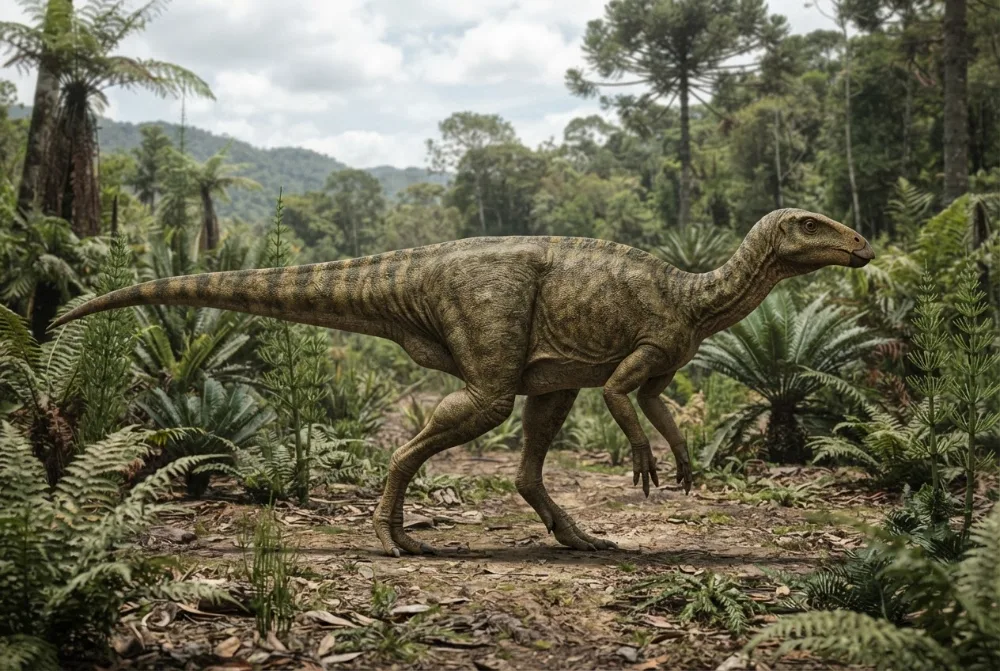
Amanasaurus was a plant-eating dinosaur that lived about 233 million years ago in what is now Brazil. It had a beak-like mouth and walked on four legs, munching on ferns and other plants. This dinosaur was about the size of a large dog, making it one of the bigger plant-eaters of its time.26
Yabayeho ryari?
Yanganaga ite?
Yari ndende ite?
Ubutumburuke bwayo bwanganaga iki?
igereranya
Yari iremereye ite?
 ndende nk'injangwe 2,5 zo mu rugo zikurikiranye🍌ndende nk'imineke 7 ikurikiranyeiremereye nk'injangwe yo mu rugo🍌iremereye nk'imineke 29🪑nto ku buryo yanyura munsi y'intebe🏃yashoboraga kwiruka metero 100 mu masegonda 14 (umuntu wihuta kurusha abandi akenera 9,6)
Amanasaurus yanganaga ite ugereranyije NAWE?
Ni imibare gusa ibarirwa muri mushakisha yawe. Nta kintu kibikwa cyangwa cyoherezwa ahandi.
Yihutaga ite?


Utuntu dushimishije
Amanasaurus lived during a time called the Carnian pluvial episode, a wet period when it rained a lot. Its name 'rain lizard' comes from that.12
Scientists know Amanasaurus from just two leg bones: a top part of a right thigh bone and a bottom part of a left thigh bone. These bones were found in the same spot.21
Amanasaurus was about the same size as the earliest dinosaurs that lived alongside it. This surprised scientists, who thought silesaurids were always smaller.2
The thigh bone of Amanasaurus had a special groove called a cleft between the top of the anterior trochanter and the shaft. This is the oldest such feature seen in any silesaurid.2
Ibibazo bibazwa cyane kuri Amanasaurus
?How big was Amanasaurus?
About 1.3 metres (4.3 feet) long, based on the larger leg bone found. That is roughly the size of a large dog.4
?Was Amanasaurus a dinosaur?
Scientists disagree. Some say it was a very early ornithischian dinosaur, while others say it was a close cousin of dinosaurs. Either way, it is a dinosauriform, meaning it is closely related to dinosaurs.51
?What did Amanasaurus eat?
It was a plant-eater. It used its beak-like mouth to munch on ferns and other plants that grew during the rainy Carnian period.4
Ku bazobereye muri dinozore
- Izina rya siyansi
- Amanasaurus
- Yiswe na
- Müller and Garcia 20236
- Itsinda
- Izirya ibimera zifite umunwa w'inyoni
- Umuryango / ishami
- Silesauridae6
- Ishyirwa mu byiciro
- Ornithischia6
- Imyaka y'amabuye
- imyaka miliyoni 237 kugeza 227 (Carnian)6
- Ibihugu
- Burezili6
- Ibisigazwa byanditswe
- 1 muri The Paleobiology Database6
- Ivumburwa
- Amanasaurus was named in 2023 by paleontologists Rodrigo T. Müller and Maurício S. Garcia. They studied two fossil leg bones found at the Pivetta site in Brazil.62
- Biracyagibwaho impaka
- Scientists are not sure if Amanasaurus was a true dinosaur or a very close relative. Some studies place it inside Ornithischia, while others put it just outside Dinosauria.21
Aho amakuru yakuwe
- Amanasaurus (en.wikipedia.org)
- A new silesaurid from Carnian beds of Brazil fills a gap in the radiation of avian line archosaurs (nature.com)
- Amanasaurus nesbitti | Dinosaur Database by DinoAnimals.com (dinoanimals.com)
- Paleontólogos da UFSM descobrem nova espécie pré-histórica que preenche lacuna na evolução dos dinossauros – UFSM (ufsm.br)
- A new silesaurid from Carnian beds of Brazil fills a gap in the radiation of avian line archosaurs | Scientific Reports (nature.com)
- Amanasaurus in The Paleobiology Database (CC BY 4.0): imyaka, ahantu, inzego z'amabuye, ishyirwa mu byiciro.
Buri kintu kiri kuri uru rupapuro gifite nimero yerekana aho cyakuwe. Niba hari icyo twibeshye, tubabarire, turi abakunzi ba dinozore, ntituri ikinyamakuru cya siyansi. Tubwire kuri [email protected] tuzagikosora.
 Rex arashonje! Dino Wiki ni umushinga wa papa umwe yakoreye umuhungu we ukunda dinozore, ni ubuntu, nta matangazo kandi nta bigukurikirana. Abantu bakuru bashobora guha Rex akantu ko kurya kugira ngo Dino Wiki ikomeze kuboneka kuri interineti.Gaburira Rex
 Iguanodon
 Tenontosaurus
 Thescelosaurus
 Zalmoxes
 Camptosaurus
 Rhabdodon
 Nothosaurus
 Massospondylus
 Plateosaurus
 Coelophysis
 Podokesaurus
 Simosaurus