 Uri dinozore iyihe? Umukino w'ibibazo
 Intambara ya dinozore
 Isiganwa rya dinozore
 Imikino mito ya dinozore
 Alubumu ya sitikeri
 Intonde za TOP za dinozore
 Ntungura!
Yabayeho ryari?

Yanganaga ite?
Yari ndende ite?
Ubutumburuke bwayo bwanganaga iki?
igereranya
Yari iremereye ite?
 ndende nk'injangwe 4 zo mu rugo zikurikiranye🍌ndende nk'imineke 12 ikurikiranye🍌iremereye nk'imineke 110🏃yashoboraga kwiruka metero 100 mu masegonda 9,2 (umuntu wihuta kurusha abandi akenera 9,6)
Megapnosaurus yanganaga ite ugereranyije NAWE?
Ni imibare gusa ibarirwa muri mushakisha yawe. Nta kintu kibikwa cyangwa cyoherezwa ahandi.
Yihutaga ite?


Utuntu dushimishije
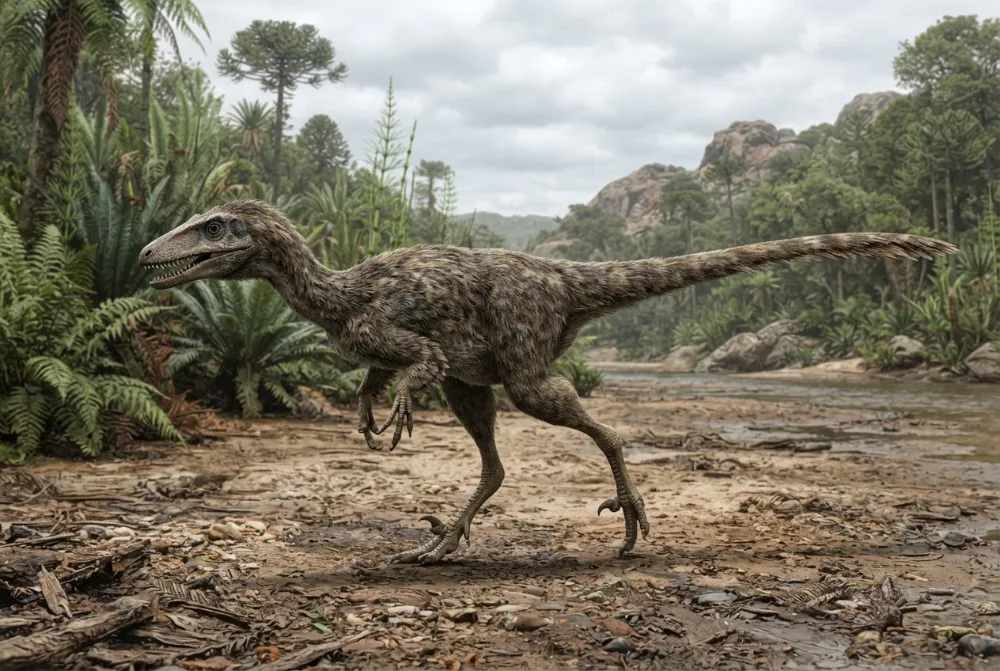
Megapnosaurus was one of the first dinosaurs ever shown with feathers in pictures, even though no one has found actual feathers with its fossils.1
At least 30 Megapnosaurus skeletons were found together in Zimbabwe, which suggests they might have lived or hunted in groups.1
Its name changed over time: first it was called Syntarsus, but that name was already used for a beetle, so scientists gave it a new name in 2001.1
Megapnosaurus had an S-shaped neck and long hind legs that looked like the legs of a secretary bird.1
Its hands had four fingers, which is more than most later meat-eating dinosaurs had.1
Some scientists think Megapnosaurus might actually belong to the genus Coelophysis, but most recent studies say it is its own genus.1
Ibibazo bibazwa cyane kuri Megapnosaurus
?How big was Megapnosaurus?
Megapnosaurus grew up to about 2.2 metres (7.2 feet) long and weighed up to 13 kilograms (29 pounds).1
?What did Megapnosaurus eat?
Megapnosaurus was a carnivore, meaning it ate meat. It may have hunted in packs and preyed on early plant-eating dinosaurs and lizards.1
?When did Megapnosaurus live?
Megapnosaurus lived during the Early Jurassic Period, about 199 to 188 million years ago.1
?Where was Megapnosaurus found?
Fossils of Megapnosaurus were found in Zimbabwe and South Africa in Africa.1
?Did Megapnosaurus have feathers?
Nobody knows for sure. It was one of the first dinosaurs shown with feathers in pictures, but no actual feathers have been found with its fossils.1
?Why is it called Megapnosaurus?
Megapnosaurus means 'big dead lizard' in Greek. It got this name after its first name, Syntarsus, was already used for a beetle.1
Ku bazobereye muri dinozore
- Izina rya siyansi
- Megapnosaurus
- Yiswe na
- Ivie et al. 20012
- Itsinda
- Dinozore zirya inyama
- Umuryango / ishami
- Coelophysidae2
- Ishyirwa mu byiciro
- Theropoda > Coelophysoidea2
- Imyaka y'amabuye
- imyaka miliyoni 201 kugeza 193 (Hettangian / Sinemurian)2
- Inzego z'amabuye
- Forest Sandstone, Nyamandhlovu Sandstones, Elliot2
- Ibihugu
- Zimbabwe, Afurika y'Epfo, Ubushinwa, Amerika2
- Ibisigazwa byanditswe
- 8 muri The Paleobiology Database2
- Ivumburwa
- The first fossils were found in 1963 by students in Zimbabwe. Scientist Michael Raath named it Syntarsus rhodesiensis in 1969, and later it was renamed Megapnosaurus in 2001.1
- Biracyagibwaho impaka
- Scientists still debate whether Megapnosaurus should be its own genus or just a species of Coelophysis.1
Aho amakuru yakuwe
- Megapnosaurus (en.wikipedia.org)
- Megapnosaurus in The Paleobiology Database (CC BY 4.0): imyaka, ahantu, inzego z'amabuye, ishyirwa mu byiciro.
Buri kintu kiri kuri uru rupapuro gifite nimero yerekana aho cyakuwe. Niba hari icyo twibeshye, tubabarire, turi abakunzi ba dinozore, ntituri ikinyamakuru cya siyansi. Tubwire kuri [email protected] tuzagikosora.
 Rex arashonje! Dino Wiki ni umushinga wa papa umwe yakoreye umuhungu we ukunda dinozore, ni ubuntu, nta matangazo kandi nta bigukurikirana. Abantu bakuru bashobora guha Rex akantu ko kurya kugira ngo Dino Wiki ikomeze kuboneka kuri interineti.Gaburira Rex
 Allosaurus
 Carnotaurus
 Dilophosaurus
 Giganotosaurus
 Compsognathus
 Paronychodon
 Stenopterygius
 Dorygnathus
 Lufengosaurus
 Scutellosaurus
 Yunnanosaurus
 Temnodontosaurus