 Uri dinozore iyihe? Umukino w'ibibazo
 Intambara ya dinozore
 Isiganwa rya dinozore
 Imikino mito ya dinozore
 Alubumu ya sitikeri
 Intonde za TOP za dinozore
 Ntungura!
Yabayeho ryari?

Yanganaga ite?
Yari ndende ite?
Ubutumburuke bwayo bwanganaga iki?
igereranya
 ndende nk'injangwe 4 zo mu rugo zikurikiranye🍌ndende nk'imineke 11 ikurikiranye🏃yashoboraga kwiruka metero 100 mu masegonda 8,4 (umuntu wihuta kurusha abandi akenera 9,6)
Panguraptor yanganaga ite ugereranyije NAWE?
Ni imibare gusa ibarirwa muri mushakisha yawe. Nta kintu kibikwa cyangwa cyoherezwa ahandi.
Yihutaga ite?


Utuntu dushimishije
Panguraptor is the first well-preserved coelophysoid dinosaur ever found in Asia. Before it, scientists only had a few limb bones from this group in Asia.2
Its name comes from Pangu, a god in Chinese mythology who created the world, and the Latin word for robber.1
The only known skeleton is from a young animal that was about 2 metres long. It was probably still growing when it died.1
Panguraptor lived during the Early Jurassic Period, around 200 million years ago, when all the continents were joined together as one supercontinent called Pangaea.12
Its teeth were slightly curved but had no serrations, which is unusual for a meat-eating dinosaur.1
The fossil was discovered on a hillside in China in 2007 and was so fragile that scientists had to glue and plaster it right there to keep it safe.1
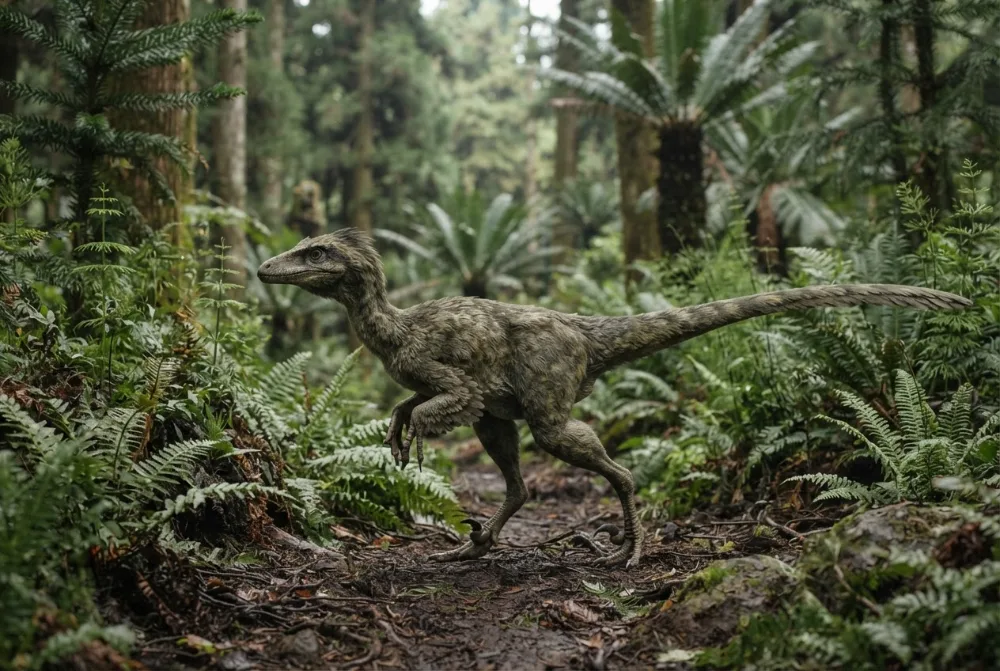
Ibibazo bibazwa cyane kuri Panguraptor
?How big was Panguraptor?
About 2 metres (6.6 feet) long. That is roughly the length of a large bed. The only known skeleton was from a young animal that was probably still growing.12
?What did Panguraptor eat?
It ate meat. It was a small, fast meat-eating dinosaur that hunted or scavenged for food. Its teeth were slightly curved but had no serrations, which is unusual for a meat-eater.12
Ku bazobereye muri dinozore
- Izina rya siyansi
- Panguraptor
- Yiswe na
- You et al. 20143
- Itsinda
- Dinozore zirya inyama
- Umuryango / ishami
- Coelophysidae3
- Ishyirwa mu byiciro
- Theropoda > Coelophysoidea3
- Imyaka y'amabuye
- imyaka miliyoni 201 kugeza 200 (Hettangian)3
- Inzego z'amabuye
- Lufeng3
- Ibihugu
- Ubushinwa3
- Ibisigazwa byanditswe
- 1 muri The Paleobiology Database3
- Ivumburwa
- The fossil was found on 12 October 2007 by a survey team from Lufeng County, China, on a hillside near Xiaolishu Village. It was described and named Panguraptor lufengensis in 2014 by paleontologist You Hailu and his team.1
- Biracyagibwaho impaka
- Scientists are not sure if some other small dinosaur bones from the same area belong to Panguraptor or to a different species.1
Aho amakuru yakuwe
- Panguraptor (en.wikipedia.org)
- The first well-preserved coelophysoid theropod dinosaur from Asia (mapress.com)
- Panguraptor in The Paleobiology Database (CC BY 4.0): imyaka, ahantu, inzego z'amabuye, ishyirwa mu byiciro.
Buri kintu kiri kuri uru rupapuro gifite nimero yerekana aho cyakuwe. Niba hari icyo twibeshye, tubabarire, turi abakunzi ba dinozore, ntituri ikinyamakuru cya siyansi. Tubwire kuri [email protected] tuzagikosora.
 Rex arashonje! Dino Wiki ni umushinga wa papa umwe yakoreye umuhungu we ukunda dinozore, ni ubuntu, nta matangazo kandi nta bigukurikirana. Abantu bakuru bashobora guha Rex akantu ko kurya kugira ngo Dino Wiki ikomeze kuboneka kuri interineti.Gaburira Rex
 Allosaurus
 Carnotaurus
 Dilophosaurus
 Giganotosaurus
 Compsognathus
 Paronychodon
 Stenopterygius
 Dorygnathus
 Lufengosaurus
 Scutellosaurus
 Yunnanosaurus
 Temnodontosaurus