 Uri dinozore iyihe? Umukino w'ibibazo
 Intambara ya dinozore
 Isiganwa rya dinozore
 Imikino mito ya dinozore
 Alubumu ya sitikeri
 Intonde za TOP za dinozore
 Ntungura!
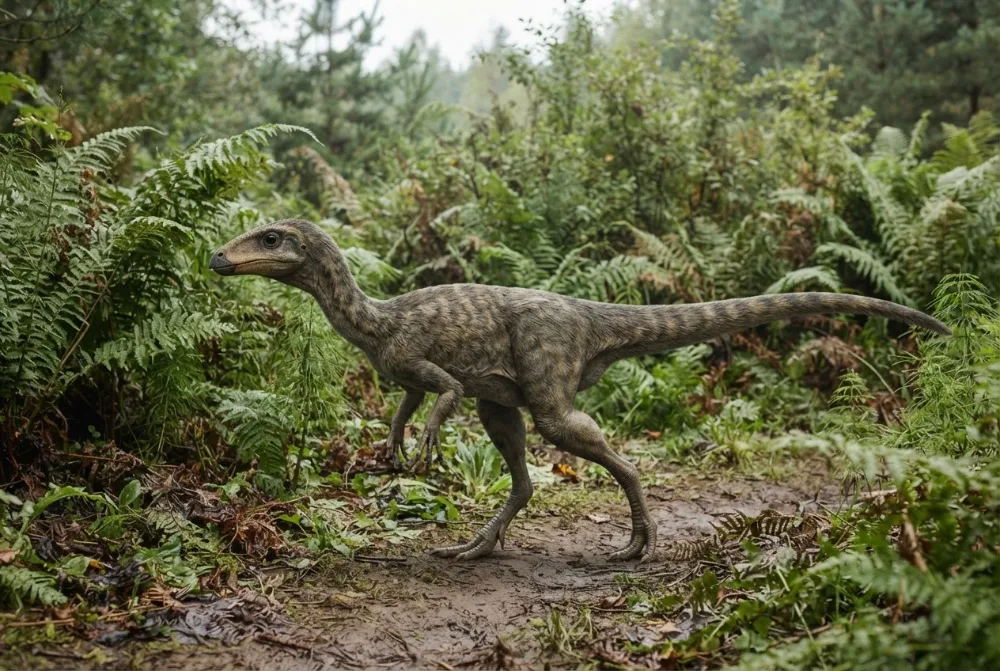
Silesaurus
Silesaurus was a small, beaked plant-eater that lived about 230 million years ago in what is now Poland. It looked a bit like a dinosaur but was actually a close cousin, not a true dinosaur. Silesaurus had a horny beak on its lower jaw and weak front legs.12
Yabayeho ryari?
Yanganaga ite?
Yari ndende ite?
Ubutumburuke bwayo bwanganaga iki?
Yari iremereye ite?

 ndende nk'imbwa 2,5 zikurikiranye🍌ndende nk'imineke 14 ikurikiranye🍉iremereye nk'imbuto 5 za watermelon🏃yashoboraga kwiruka metero 100 mu masegonda 9,2 (umuntu wihuta kurusha abandi akenera 9,6)
Silesaurus yanganaga ite ugereranyije NAWE?
Ni imibare gusa ibarirwa muri mushakisha yawe. Nta kintu kibikwa cyangwa cyoherezwa ahandi.
Yihutaga ite?


Utuntu dushimishije
Silesaurus had a beak on its lower jaw, similar to later plant-eating dinosaurs like Lesothosaurus, but without the extra predentary bone.2
It had only 11 to 12 teeth in each dentary and maxilla, a low number compared to other early archosaurs.2
Its front limbs were long and slender, but weak, which scientists think is a special feature of this animal.1
Silesaurus had 25 presacral vertebrae, with 9 to 11 in the neck, and the last two back bones were fused to the hip bones.2
The first toe on its foot was reduced to a tiny metatarsal bone that probably did not have any toe bones.2
Silesaurus is the earliest known herbivore among the mesotarsal archosaurs, a group that includes dinosaurs and their relatives.2
Its fossils were found in a clay pit in Krasiejów, Poland, alongside remains of metoposaurs, phytosaurs, and aetosaurs.2
Ibibazo bibazwa cyane kuri Silesaurus
?Was Silesaurus a dinosaur?
No, Silesaurus was not a dinosaur. It was a dinosauriform, a close cousin of dinosaurs.3
?How big was Silesaurus?
Silesaurus was about 2.3 metres long. It was lightly built and probably fast and agile.3
?What did Silesaurus eat?
Silesaurus probably ate both plants and insects. Scientists found beetle remains in fossil dung that may belong to Silesaurus, suggesting it pecked insects off the ground like modern birds.3
?Did Silesaurus have feathers?
Nobody knows for sure. The fossils do not preserve feathers, so scientists cannot tell if Silesaurus had them.3
?When did Silesaurus live?
Silesaurus lived about 230 million years ago during the Late Triassic period.3
?Where was Silesaurus found?
Silesaurus fossils were found in a clay pit in Krasiejów, Poland.3
Ku bazobereye muri dinozore
- Izina rya siyansi
- Silesaurus
- Yiswe na
- Dzik 20034
- Itsinda
- Izirya ibimera zifite umunwa w'inyoni
- Umuryango / ishami
- Silesauridae4
- Ishyirwa mu byiciro
- Ornithischia4
- Imyaka y'amabuye
- imyaka miliyoni 234 kugeza 227 (Carnian)4
- Inzego z'amabuye
- Drawno Beds, Grabowa4
- Ibihugu
- Polonye4
- Ibisigazwa byanditswe
- 3 muri The Paleobiology Database4
- Ivumburwa
- Silesaurus was named by Polish paleontologist Jerzy Dzik in 2003. The fossils were found in a clay pit near Opole, Poland, in rocks from the Late Triassic period.14
- Biracyagibwaho impaka
- Scientists are not sure whether Silesaurus is an early member of the ornithischian dinosaur lineage, a common ancestor of both ornithischians and prosauropods, or a separate line that evolved plant-eating on its own.2
Aho amakuru yakuwe
- A beaked herbivorous archosaur with dinosaur affinities from the early Late Triassic of Poland: Journal of Vertebrate Paleontology: Vol 23, No 3 (tandfonline.com)
- A BEAKED HERBIVOROUS ARCHOSAUR WITH DINOSAUR AFFINITIES FROM THE EARLY LATE TRIASSIC OF POLAND (keuper.us.edu.pl)
- Silesaurus (en.wikipedia.org)
- Silesaurus in The Paleobiology Database (CC BY 4.0): imyaka, ahantu, inzego z'amabuye, ishyirwa mu byiciro.
Buri kintu kiri kuri uru rupapuro gifite nimero yerekana aho cyakuwe. Niba hari icyo twibeshye, tubabarire, turi abakunzi ba dinozore, ntituri ikinyamakuru cya siyansi. Tubwire kuri [email protected] tuzagikosora.
 Rex arashonje! Dino Wiki ni umushinga wa papa umwe yakoreye umuhungu we ukunda dinozore, ni ubuntu, nta matangazo kandi nta bigukurikirana. Abantu bakuru bashobora guha Rex akantu ko kurya kugira ngo Dino Wiki ikomeze kuboneka kuri interineti.Gaburira Rex
 Iguanodon
 Tenontosaurus
 Thescelosaurus
 Zalmoxes
 Camptosaurus
 Rhabdodon
 Nothosaurus
 Massospondylus
 Plateosaurus
 Coelophysis
 Podokesaurus
 Simosaurus