 Uri dinozore iyihe? Umukino w'ibibazo
 Intambara ya dinozore
 Isiganwa rya dinozore
 Imikino mito ya dinozore
 Alubumu ya sitikeri
 Intonde za TOP za dinozore
 Ntungura!
Yelaphomte
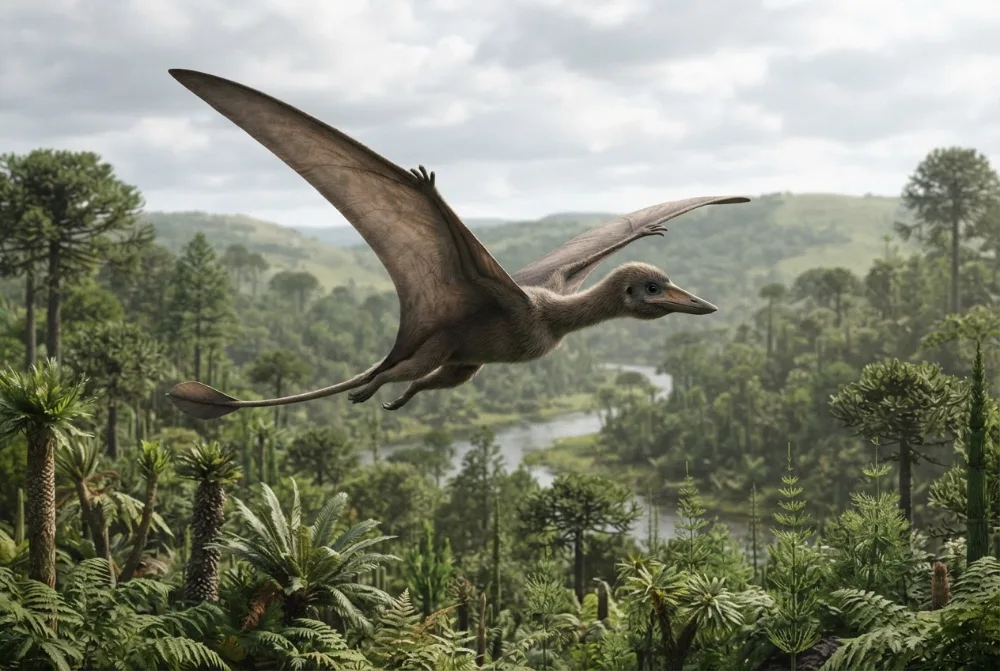
Yelaphomte was a small flying reptile that lived during the Late Triassic in what is now Argentina. It had a tall, thin crest on its snout and was one of the first pterosaurs found in the southern half of the world.12
Yabayeho ryari?
Yihutaga ite?


Utuntu dushimishije
Yelaphomte is one of the only known Triassic pterosaurs from the southern hemisphere, along with its relative Pachagnathus.12
Its snout was full of air spaces, making it lightweight for flying. The name Yelaphomte means 'beast of the air' in the language of the Huarpe people.1
The only known fossil is a piece of the snout only 15.4 mm long, including parts of the upper jaw and palate.1
Yelaphomte lived far from the sea, in a dry inland environment, unlike many other early pterosaurs that lived near coasts.1
The crest on its snout had a unique pattern of grooves that is not seen in any other pterosaur.1
Scientists think Yelaphomte may have been a small adult, because the bones in its snout were tightly fused together, which often happens when an animal is fully grown.1
Ku bazobereye muri dinozore
- Izina rya siyansi
- Yelaphomte
- Yiswe na
- Martínez et al. 20223
- Itsinda
- Ibikururanda biguruka
- Umuryango / ishami
- Raeticodactylidae3
- Ishyirwa mu byiciro
- Pterosauria3
- Imyaka y'amabuye
- imyaka miliyoni 227 kugeza 206 (Norian)3
- Inzego z'amabuye
- Quebrada del Barro3
- Ibihugu
- Arijantine3
- Ibisigazwa byanditswe
- 1 muri The Paleobiology Database3
- Ivumburwa
- Yelaphomte was discovered by a team led by Ricardo Martínez between 2012 and 2014 in Argentina. It was named and described in 2022 by Martínez, Andres, Apaldetti, and Cerda.13
- Biracyagibwaho impaka
- Scientists are not sure exactly how big Yelaphomte grew, because only a small piece of its snout has been found.1
Aho amakuru yakuwe
- Yelaphomte (en.wikipedia.org)
- The dawn of the flying reptiles: first Triassic record in the southern hemisphere (onlinelibrary.wiley.com)
- Yelaphomte in The Paleobiology Database (CC BY 4.0): imyaka, ahantu, inzego z'amabuye, ishyirwa mu byiciro.
Buri kintu kiri kuri uru rupapuro gifite nimero yerekana aho cyakuwe. Niba hari icyo twibeshye, tubabarire, turi abakunzi ba dinozore, ntituri ikinyamakuru cya siyansi. Tubwire kuri [email protected] tuzagikosora.
 Rex arashonje! Dino Wiki ni umushinga wa papa umwe yakoreye umuhungu we ukunda dinozore, ni ubuntu, nta matangazo kandi nta bigukurikirana. Abantu bakuru bashobora guha Rex akantu ko kurya kugira ngo Dino Wiki ikomeze kuboneka kuri interineti.Gaburira Rex
 Pteranodon
 Quetzalcoatlus
 Dorygnathus
 Rhamphorhynchus
 Anhanguera
 Pterodactylus
 Nothosaurus
 Massospondylus
 Plateosaurus
 Coelophysis
 Podokesaurus
 Simosaurus