 Kwisi: O dinosaure efe?
 Ntwa ya didinosaure
 Peiso ya didinosaure
 Dipapadi tse nyane tsa didinosaure
 Albamo ya ditikara
 Manane a TOP a didinosaure
 Nkgethele!
E phetse neng?

E ne e le kgolo hakae?
E ne e le telele hakae?
E ne e phahame hakae?
E ne e le boima hakae?
 telele jwaloka dintja tse 6 ho tloha nkong ho isa mohatleng🍌telele jwaloka dibanana tse 36 di behilwe ka mola🍉boima jwaloka mahapu a 50🧸boima jwaloka bana ba kereshe ba 13🎒boima jwaloka bana ba sekolo ba 8🏃e ne e ka matha dimitara tse 100 ka metsotswana e 7.7 (motho ya lebelo ka ho fetisisa o hloka 9,6)
Dracovenator e ne e le kgolo hakae ha e bapiswa le WENA?
Ke dipalo feela ho browser ya hao. Ha ho letho le bolokwang kapa le romelwang kae kapa kae.
E ne e le lebelo hakae?


Dintlha tse monate
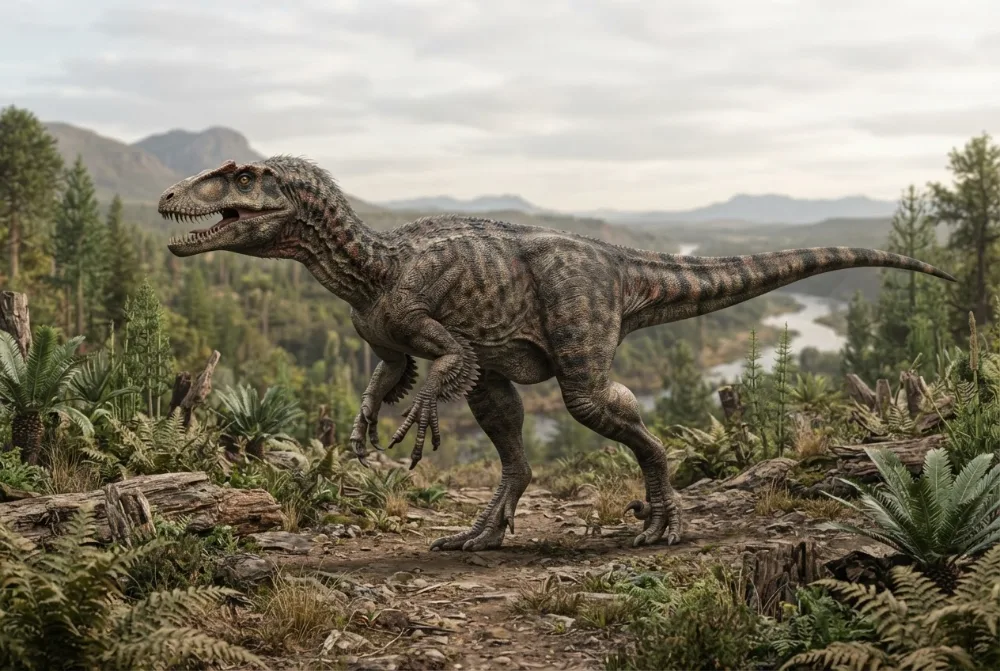
Dracovenator had a kink in its upper jaw, between the maxilla and the premaxilla, similar to Dilophosaurus.1
The back of its lower jaw had lumps and bumps, a feature also seen in Dilophosaurus but smaller.1
The only fossils found so far are a partial skull and some jaw bones. The original skull was lost after being stored at a university.1
Dracovenator lived during the Early Jurassic, about 201 to 199 million years ago.1
Its name comes from the Drakensberg mountains, which means 'Dragon's Mountain' in Dutch.1
The species name regenti honors Regent 'Lucas' Huma, the field assistant who helped discover the fossils.1
Dipotso tse botswang haholo ka Dracovenator
?How big was Dracovenator?
About 5.5 to 6.5 metres (18 to 21 feet) long and weighed around 250 kilograms (550 pounds). Some footprints suggest it might have been up to 9 metres (30 feet) long, but that is not certain.1
?What did Dracovenator eat?
It was a meat-eater that hunted big plant-eating dinosaurs like Massospondylus.1
?When did Dracovenator live?
It lived during the Early Jurassic period, about 201 to 199 million years ago.1
?Where was Dracovenator found?
Its fossils were discovered in the Upper Drumbo Farm area of the Eastern Cape Province in South Africa.1
?Is Dracovenator related to Dilophosaurus?
Yes, scientists think Dracovenator was closely related to Dilophosaurus and another dinosaur called Zupaysaurus.1
?Why is it called Dracovenator?
Its name means 'dragon hunter' in Latin, because it was found near the Drakensberg mountains, which are called 'Dragon's Mountain' in Dutch.1
Bakeng sa ditsebi tsa didinosaure
- Lebitso la saense
- Dracovenator
- E rehilwe ke
- Yates 20054
- Sehlopha
- Didinosaure tse jang nama
- Lelapa / leloko
- Neotheropoda4
- Tlhophiso
- Theropoda4
- Dilemo tsa mafika
- dilemo tse dimilione tse 201 ho isa ho 193 (Hettangian / Sinemurian)4
- Dibopeho tsa mafika
- Elliot4
- Dinaha
- Afrika Borwa4
- Direkoto tsa difosili
- 2 ho The Paleobiology Database4
- Ho sibollwa
- Dracovenator was named by Adam M. Yates in 2005. The first fossils were found by James Kitching and Regent Huma at Upper Drumbo Farm in South Africa.1
- E sa ntse e phehwa kgang
- Scientists are not sure exactly how Dracovenator is related to other early theropods. Some studies place it close to Dilophosaurus, but the evidence is not strong.2
Moo dintlha di tswang teng
- Dracovenator (en.wikipedia.org)
- A new theropod dinosaur from the Early Jurassic of South Africa and its implications for the early evolution of theropods (web.archive.org)
- Dracovenator: The Dragon Hunter of Early Jurassic (thedinosaurs.org)
- Dracovenator in The Paleobiology Database (CC BY 4.0): dilemo, dibaka, dibopeho tsa mafika, tlhophiso.
Ntlha e nngwe le e nngwe leqepheng lena e na le nomoro e supang mohlodi wa yona. Haeba re fositse ho hong, re kopa tshwarelo, re balatedi ba didinosaure, ha re koranta ya saense. Re bolelle ho [email protected] mme re tla e lokisa.
 Rex o lapile! Dino Wiki ke projeke ya ntate bakeng sa mora wa hae ya ratang didinosaure, ke mahala, ha ho dipapatso, ha ho disebedi. Batho ba baholo ba ka fepa Rex seneke ho thusa hore e dule e le inthaneteng.Fepa Rex
 Allosaurus
 Carnotaurus
 Dilophosaurus
 Giganotosaurus
 Compsognathus
 Paronychodon
 Stenopterygius
 Dorygnathus
 Lufengosaurus
 Scutellosaurus
 Yunnanosaurus
 Temnodontosaurus