 Uri dinozore iyihe? Umukino w'ibibazo
 Intambara ya dinozore
 Isiganwa rya dinozore
 Imikino mito ya dinozore
 Alubumu ya sitikeri
 Intonde za TOP za dinozore
 Ntungura!
Yabayeho ryari?

Yanganaga ite?
Yari ndende ite?
Ubutumburuke bwayo bwanganaga iki?
igereranya
 ndende nk'injangwe 2,5 zo mu rugo zikurikiranye🍌ndende nk'imineke 7 ikurikiranye🪑nto ku buryo yanyura munsi y'intebe🏃yashoboraga kwiruka metero 100 mu masegonda 12 (umuntu wihuta kurusha abandi akenera 9,6)
Lycorhinus yanganaga ite ugereranyije NAWE?
Ni imibare gusa ibarirwa muri mushakisha yawe. Nta kintu kibikwa cyangwa cyoherezwa ahandi.
Yihutaga ite?


Utuntu dushimishije
Lycorhinus was first thought to be a mammal-like reptile called a cynodont, not a dinosaur, when it was named in 1924.1
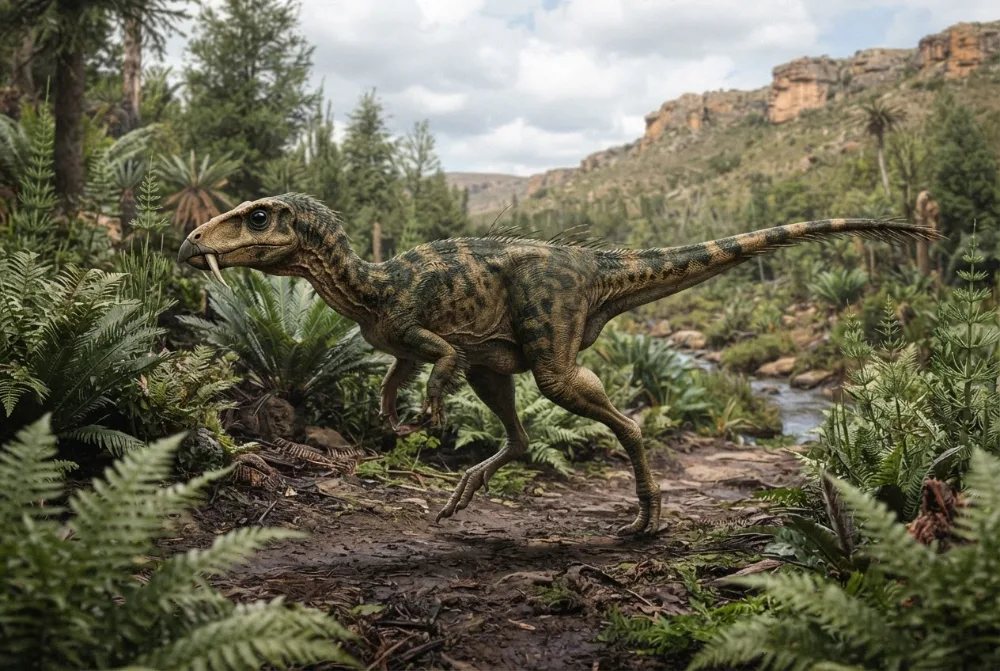
It had a beak at the front of its mouth, like a parrot, but also had long, fang-like canine teeth.1
Lycorhinus was only about 1.2 metres (4 feet) long, about the size of a large dog.1
Scientists once thought a different dinosaur called Lanasaurus was a separate species, but now they think it was the same as Lycorhinus.13
Its fossils were found in the Upper Elliot Formation, which is made of red mudstone from ancient rivers and deserts.1
Lycorhinus lived alongside the long-necked dinosaur Massospondylus and the early crocodile relative Protosuchus.1
Ibibazo bibazwa cyane kuri Lycorhinus
?What did Lycorhinus eat?
Lycorhinus was a plant-eater. Its teeth show wear from chewing tough plants, and scientists think it may have also eaten fruits, roots, and nuts, like modern peccaries do.1
?How big was Lycorhinus?
Lycorhinus was about 1.2 metres (4 feet) long, which is about the size of a large dog.12
Gusenya ibinyoma
Ibivugwa: Because Lycorhinus had long canine teeth, some people think it was a meat-eater.
Ukuri: Lycorhinus was actually a plant-eater. Its teeth show wear from chewing plants, and its beak helped it crop vegetation.1
Ku bazobereye muri dinozore
- Izina rya siyansi
- Lycorhinus
- Yiswe na
- Haughton 19243
- Itsinda
- Izirya ibimera zifite umunwa w'inyoni
- Umuryango / ishami
- Heterodontosauridae3
- Ishyirwa mu byiciro
- Ornithischia > Heterodontosauridae3
- Imyaka y'amabuye
- imyaka miliyoni 201 kugeza 184 (Hettangian / Pliensbachian)3
- Inzego z'amabuye
- Elliot, Clarens3
- Ibihugu
- Afurika y'Epfo, Lesotho3
- Ibisigazwa byanditswe
- 5 muri The Paleobiology Database3
- Izwi kandi ku izina rya
- Lanasaurus (amazina ya kera ubu abarwa nk'inyamaswa imwe)3
- Ivumburwa
- Lycorhinus was named in 1924 by South African paleontologist Sidney H. Haughton, based on a partial jaw found in the Upper Elliot Formation of South Africa.13
- Biracyagibwaho impaka
- Scientists are not sure exactly how Lycorhinus used its long canine teeth, whether for defense, digging, or eating tough plants.1
Aho amakuru yakuwe
- Lycorhinus (en.wikipedia.org)
- Lycorhinus | Natural History Museum (nhm.ac.uk)
- Lycorhinus in The Paleobiology Database (CC BY 4.0): imyaka, ahantu, inzego z'amabuye, ishyirwa mu byiciro.
Buri kintu kiri kuri uru rupapuro gifite nimero yerekana aho cyakuwe. Niba hari icyo twibeshye, tubabarire, turi abakunzi ba dinozore, ntituri ikinyamakuru cya siyansi. Tubwire kuri [email protected] tuzagikosora.
 Rex arashonje! Dino Wiki ni umushinga wa papa umwe yakoreye umuhungu we ukunda dinozore, ni ubuntu, nta matangazo kandi nta bigukurikirana. Abantu bakuru bashobora guha Rex akantu ko kurya kugira ngo Dino Wiki ikomeze kuboneka kuri interineti.Gaburira Rex
 Iguanodon
 Tenontosaurus
 Thescelosaurus
 Zalmoxes
 Camptosaurus
 Rhabdodon
 Dilophosaurus
 Stenopterygius
 Dorygnathus
 Lufengosaurus
 Scutellosaurus
 Yunnanosaurus