 Uri dinozore iyihe? Umukino w'ibibazo
 Intambara ya dinozore
 Isiganwa rya dinozore
 Imikino mito ya dinozore
 Alubumu ya sitikeri
 Intonde za TOP za dinozore
 Ntungura!
Yabayeho ryari?

Yanganaga ite?
Yari ndende ite?
Ubutumburuke bwayo bwanganaga iki?
igereranya
Pegomastax yanganaga ite ugereranyije NAWE?
Ni imibare gusa ibarirwa muri mushakisha yawe. Nta kintu kibikwa cyangwa cyoherezwa ahandi.
Yihutaga ite?


Utuntu dushimishije
Pegomastax had a very deep, parrot-like beak at the front of its jaw, which helped it bite into tough plants.1
Its skull was only about 73 mm (2.9 inches) long, smaller than a chicken's skull.1
Pegomastax lived alongside many other dinosaurs, including the long-necked Massospondylus and the small ornithischian Lesothosaurus.1
The only fossil of Pegomastax is a partial skull with a well-preserved lower jaw and teeth, found in the upper Elliot Formation.1
Scientists think Pegomastax may have been most closely related to a South American dinosaur called Manidens.1
Pegomastax had a mobile predentary bone in its lower jaw, which helped it move its beak up and down while chewing.1
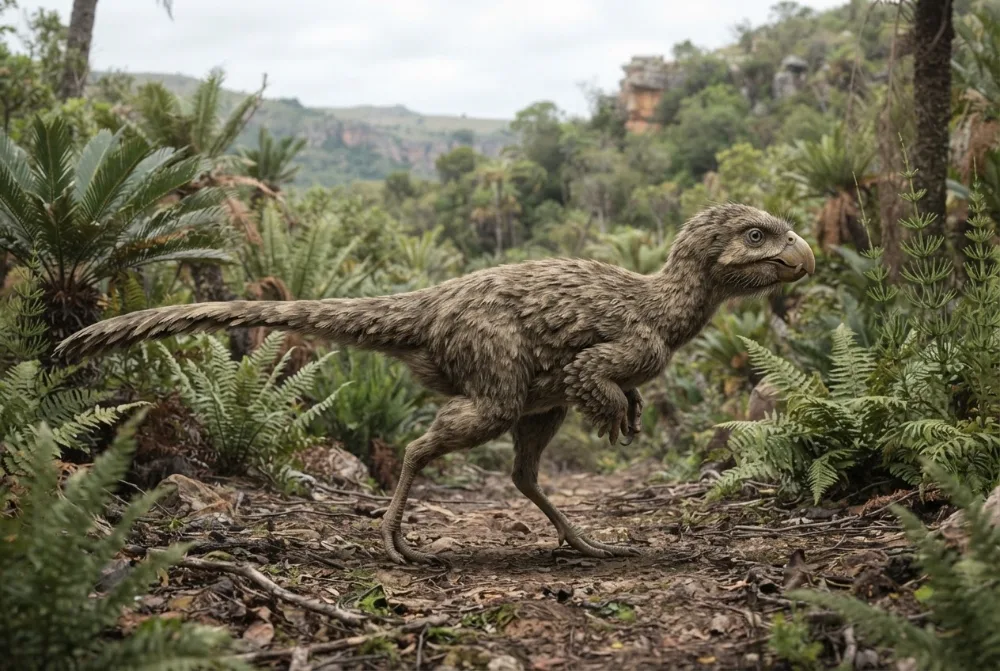
Ibibazo bibazwa cyane kuri Pegomastax
?Did Pegomastax have feathers?
Scientists think it was covered in porcupine-like quills, not feathers.4
?What did Pegomastax eat?
It was a plant-eater. It used its beak and cheek teeth like scissors to shear tough plants.14
?Why did Pegomastax have fangs?
It used its fangs for self-defense and competing for mates, like some modern plant-eating deer and peccaries.4
?When did Pegomastax live?
It lived during the Early Jurassic, about 200 to 190 million years ago.1
?Where was Pegomastax found?
Its only fossil was found in the upper Elliot Formation in South Africa.1
Ku bazobereye muri dinozore
- Izina rya siyansi
- Pegomastax
- Yiswe na
- Sereno 20126
- Itsinda
- Izirya ibimera zifite umunwa w'inyoni
- Umuryango / ishami
- Heterodontosauridae6
- Ishyirwa mu byiciro
- Ornithischia > Heterodontosauridae6
- Imyaka y'amabuye
- imyaka miliyoni 201 kugeza 193 (Hettangian / Sinemurian)6
- Inzego z'amabuye
- Elliot6
- Ibihugu
- Afurika y'Epfo6
- Ibisigazwa byanditswe
- 1 muri The Paleobiology Database6
- Ivumburwa
- Pegomastax was named by American paleontologist Paul Sereno in 2012, based on a partial skull discovered in the 1966 to 1967 expedition to the Transkei District of Cape Province, South Africa.1
- Biracyagibwaho impaka
- Scientists are still debating whether the large canine teeth of Pegomastax were used for defense, display, or occasional omnivory.1
Aho amakuru yakuwe
- Pegomastax (en.wikipedia.org)
- PBDB Taxon (paleobiodb.org)
- Dwarf species of fanged dinosaur emerges from southern Africa | University of Chicago News (news.uchicago.edu)
- New Fanged Dwarf Dinosaur Found—"Would Be Nice Pet" | National Geographic (nationalgeographic.com)
- Dwarf 'vampire' dinosaur was a plant eater - BBC News (bbc.com)
- Pegomastax in The Paleobiology Database (CC BY 4.0): imyaka, ahantu, inzego z'amabuye, ishyirwa mu byiciro.
Buri kintu kiri kuri uru rupapuro gifite nimero yerekana aho cyakuwe. Niba hari icyo twibeshye, tubabarire, turi abakunzi ba dinozore, ntituri ikinyamakuru cya siyansi. Tubwire kuri [email protected] tuzagikosora.
 Rex arashonje! Dino Wiki ni umushinga wa papa umwe yakoreye umuhungu we ukunda dinozore, ni ubuntu, nta matangazo kandi nta bigukurikirana. Abantu bakuru bashobora guha Rex akantu ko kurya kugira ngo Dino Wiki ikomeze kuboneka kuri interineti.Gaburira Rex
 Iguanodon
 Tenontosaurus
 Thescelosaurus
 Zalmoxes
 Camptosaurus
 Rhabdodon
 Dilophosaurus
 Stenopterygius
 Dorygnathus
 Lufengosaurus
 Scutellosaurus
 Yunnanosaurus